
Disclaimer: This article provides general guidance on cat dental health and pet insurance coverage in Malaysia as of March 2026. Costs vary by clinic, location, and severity. Policy terms, conditions, and exclusions apply. Always consult a licensed veterinarian for medical advice about your pet.
Your cat stops eating. You notice drooling and bad breath that wasn't there before. A trip to the vet reveals inflamed gums and a tooth that needs extraction. The bill? RM500 to RM2,000 depending on the clinic.
This guide covers everything Malaysian cat parents need to know about dental problems, treatment costs, and the one scenario where dental IS covered by pet insurance.
Here's what we'll cover:
- 5 most common cat dental problems and their symptoms
- Treatment costs at Malaysian vet clinics
- Why dental is excluded from pet insurance (and the exception)
- Home dental care that actually works
- Breeds at higher risk for dental disease
How Common Are Dental Problems in Cats?
Dental disease affects over 70% of cats by the time they turn 3 years old. It's one of the most under-diagnosed conditions in cats because cats are experts at hiding pain.
Most cat parents only discover dental issues when their cat stops eating or starts drooling excessively. By that point, the problem is usually advanced and more expensive to treat.
| Dental Problem | How Common | Severity |
|---|---|---|
| Gingivitis | Very common (all ages) | Mild to moderate, reversible |
| Periodontitis | Common in cats 3+ years | Moderate to severe |
| Tooth resorption (FORLs) | Affects 28-67% of cats | Severe, painful |
| Stomatitis | Less common | Severe, debilitating |
| Broken/fractured teeth | Occasional (trauma-related) | Varies by fracture type |
5 Common Cat Dental Problems
1. Gingivitis
Gingivitis is inflammation of the gums caused by plaque buildup. You'll notice red, swollen gum lines and mild bad breath. The good news: gingivitis is reversible with professional cleaning and proper home care.
If left untreated, gingivitis progresses to periodontitis. Early intervention saves your cat pain and saves you money on more expensive treatments down the road.
2. Periodontitis
Periodontitis is a bacterial infection that attacks the tissues and bone supporting the teeth. Once the supporting structures are damaged, the damage is permanent. Teeth may loosen and eventually fall out.
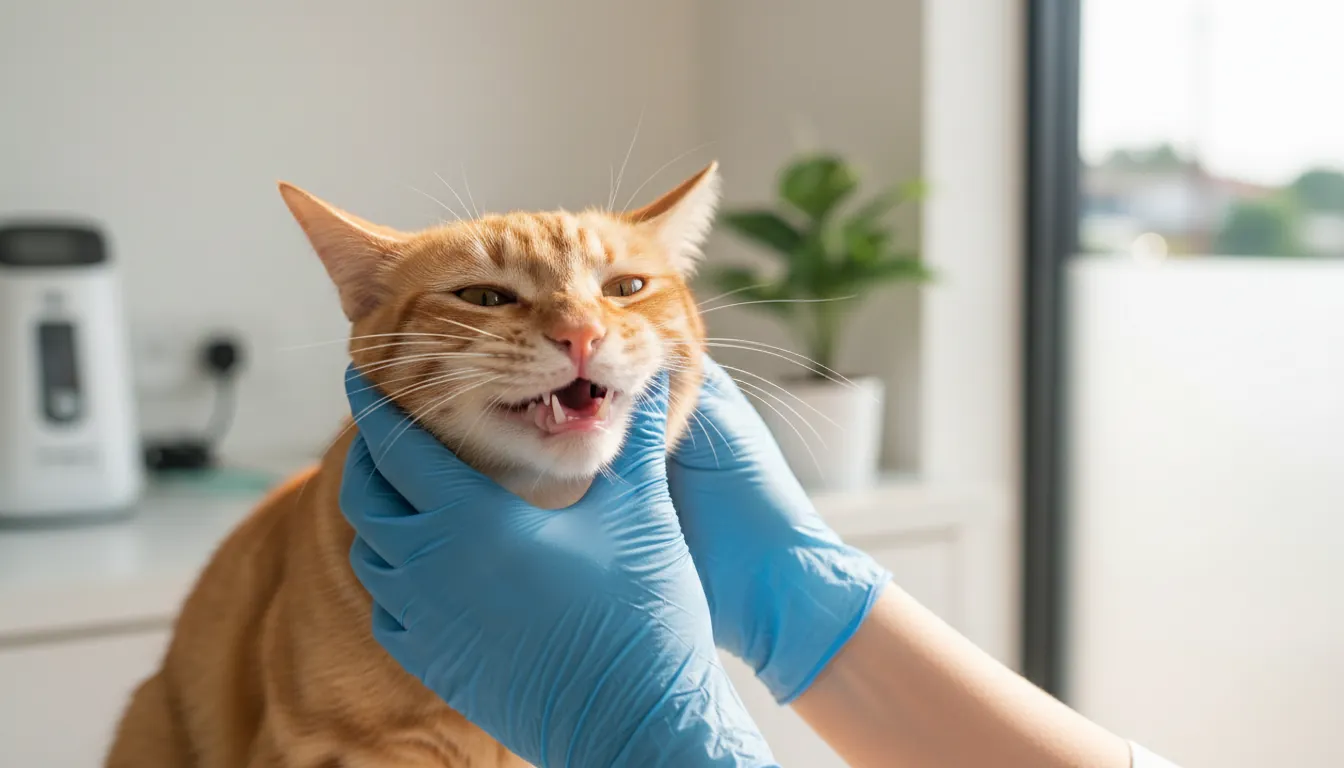
Signs include severely red gums, pus along the gum line, loose teeth, and difficulty eating. Treatment often requires tooth extraction under general anaesthesia.
3. Tooth Resorption (FORLs)
Feline odontoclastic resorptive lesions (FORLs) are the most common cause of tooth loss in cats. The tooth structure breaks down from the inside, causing extreme pain. The exact cause is still unknown.
FORLs are difficult to detect without dental X-rays. Your cat may show subtle signs like chewing on one side, dropping food, or suddenly preferring wet food over kibble.
4. Stomatitis
Stomatitis is severe, widespread inflammation of the entire mouth. It causes extreme pain, making it nearly impossible for cats to eat. Some cats with stomatitis become aggressive when you try to touch their face.
Treatment often requires full-mouth tooth extraction, which sounds extreme but actually provides significant relief. Stomatitis has been linked to feline calicivirus and immune system dysfunction.
5. Broken or Fractured Teeth
Cats can break teeth from falls, fights with other animals, or biting hard objects. A fractured tooth exposes the pulp (nerve), causing infection and pain. This is the one dental scenario that can be covered by pet insurance (more on that below).
Signs include sudden reluctance to eat, pawing at the mouth, and visible damage to the tooth. Broken teeth usually require extraction.
Warning Signs Your Cat Has Dental Problems
Cats hide pain well. By the time you notice symptoms, the dental issue may already be advanced. Here are the warning signs to watch for.
| Warning Sign | What It Could Mean | Urgency |
|---|---|---|
| Bad breath (worsening) | Gingivitis, periodontitis, infection | Schedule vet visit |
| Drooling | Stomatitis, FORLs, oral pain | See vet within 1-2 days |
| Dropping food while eating | Tooth pain, loose teeth, FORLs | See vet within 1-2 days |
| Pawing at mouth | Broken tooth, stomatitis, foreign body | See vet same day |
| Complete loss of appetite | Severe dental pain, systemic illness | Emergency, see vet immediately |
| Red or bleeding gums | Gingivitis, periodontitis | Schedule vet visit |
| Facial swelling | Tooth root abscess | Emergency, see vet immediately |
Cat Dental Treatment Costs in Malaysia
Dental treatments are among the more expensive vet procedures because most require general anaesthesia. Here's what you can expect to pay at Malaysian vet clinics.
| Treatment | Government Vet (DVS) | Private Vet Clinic |
|---|---|---|
| Dental check-up (no anaesthesia) | RM5-15 | RM50-150 |
| Dental scaling (cleaning) | RM80-150 | RM300-700 |
| Single tooth extraction | RM30-100 | RM200-800 |
| Multiple tooth extraction | RM100-300 | RM800-3,000+ |
| Full-mouth extraction (stomatitis) | RM200-500 | RM1,500-5,000 |
| Dental X-ray | RM30-60 | RM100-250 |
| Pre-anaesthesia blood work | RM50-100 | RM100-250 |
| General anaesthesia | RM50-100 | RM150-400 |
Note: Prices are estimates and vary by clinic location and case severity. Government vet clinics (Klinik Veterinar Daerah) offer lower prices but have limited appointment slots and longer waiting times.
Is Cat Dental Treatment Covered by Pet Insurance?
This is the most common question we get about dental care. Here's the clear answer.
Dental and gum procedures are excluded from Oyen's pet insurance. This includes scaling, extraction, gingivitis treatment, periodontal disease, fractured teeth removal, TMJ issues, and enamel hypoplasia.
There is one exception: dental treatment caused by an accident. If your cat breaks a tooth from a fall or injury (not from chewing or normal wear), the treatment for that specific dental injury is generally covered, subject to review by the claims team.
| Dental Scenario | Covered? | Why |
|---|---|---|
| Routine dental scaling/cleaning | Not covered | Classified as dental/gum procedure |
| Tooth extraction (disease-related) | Not covered | Falls under dental exclusion |
| Gingivitis treatment | Not covered | Dental/gum procedure |
| Stomatitis treatment | Not covered | Dental/gum procedure |
| Periodontal disease treatment | Not covered | Dental/gum procedure |
| Broken tooth from a fall or accident | Generally covered | Dental treatment due to accident (exception) |
| Jaw fracture from being hit by a car | Generally covered | Accident-related injury |
| Dental damage from cat fight injury | Generally covered | Accident-related dental treatment |
For the full list of what's covered and excluded, check Oyen's exclusions list.
Why Is Dental Excluded?
Dental disease in cats develops gradually over months and years. It's a preventable condition that responds to regular home care and professional cleanings. Pet insurance is designed to cover unexpected illnesses and injuries, not predictable, preventable conditions.
This is similar to how dental is handled in human medical insurance in Malaysia. Most medical cards exclude dental procedures too, unless caused by an accident.
What About the Vet Consultation?
If you bring your cat to the vet for symptoms like drooling or not eating, and the vet diagnoses a dental issue, the consultation itself may not be reimbursable since the underlying condition (dental disease) is excluded. If the diagnosis reveals a non-dental condition, the consultation and treatment would generally be covered under your plan.
Worried about unexpected vet bills? 🐾
With Oyen Pet Insurance, you can claim up to 90% of vet bills at any licensed clinic in Malaysia — from as low as RM30.60/month.
Policy terms and conditions apply.
How to Prevent Dental Problems in Your Cat
Prevention is the best approach since dental treatment is expensive and not covered by insurance. Here's what actually works.
| Prevention Method | Effectiveness | Cost | Practical Tips |
|---|---|---|---|
| Toothbrushing | Most effective | RM15-40 for pet toothbrush + paste | Start slowly, use pet-specific paste (never human toothpaste), aim for 3x/week |
| Dental treats | Moderate | RM15-50/pack | Look for VOHC-accepted products, give daily |
| Water additives | Mild | RM30-60/bottle | Tasteless options available, add to drinking water daily |
| Dental diet kibble | Moderate | RM50-120/bag | Larger kibble size helps scrub teeth, Royal Canin and Hill's offer dental formulas |
| Annual professional dental check | High (detection) | RM50-150/visit | Ask your vet to check teeth during annual check-ups |
How to Brush Your Cat's Teeth
Most cats won't accept toothbrushing right away. It takes patience and gradual introduction over 2-4 weeks.
| Week | What to Do |
|---|---|
| Week 1 | Let your cat taste the pet toothpaste from your finger. Reward with treats. |
| Week 2 | Gently rub the paste on gums and outer teeth using your finger. Keep sessions under 30 seconds. |
| Week 3 | Introduce the finger brush or small pet toothbrush. Focus on the outer surfaces of back teeth. |
| Week 4+ | Brush for 30-60 seconds, covering all outer tooth surfaces. Aim for 3 times per week minimum. |
Never use human toothpaste on cats. It contains fluoride and xylitol, both of which are toxic to cats. Use only veterinary-approved pet toothpaste.
Cat Breeds at Higher Risk for Dental Disease
While any cat can develop dental problems, certain breeds are genetically more prone. If you own one of these breeds, regular dental check-ups are especially important.
| Breed | Common Dental Issue | Why |
|---|---|---|
| Persian | Misaligned teeth, periodontal disease | Flat face causes crowded, misaligned teeth |
| British Shorthair | Gingivitis, tooth resorption | Genetic predisposition |
| Siamese | Periodontal disease, stomatitis | Higher susceptibility to gum inflammation |
| Maine Coon | Gingivitis, periodontitis | Large jaw but genetic gum sensitivity |
| Abyssinian | Tooth resorption (FORLs) | Breed predisposition to resorptive lesions |
| Scottish Fold | Tooth resorption, gingivitis | Genetic factors linked to cartilage issues |
If you have a breed prone to dental issues, ask your vet about scheduling a dental assessment during your cat's annual check-up. Read our guide on popular cat breeds in Malaysia for more breed-specific health information.
When to See the Vet for Dental Issues
Some dental symptoms can wait for a scheduled appointment. Others need immediate attention.
| Urgency | Symptoms | What to Do |
|---|---|---|
| Emergency | Complete refusal to eat for 24+ hours, facial swelling, bleeding from mouth | See vet immediately or visit emergency clinic |
| Urgent | Excessive drooling, pawing at mouth, visible broken tooth | See vet within 1-2 days |
| Routine | Bad breath, mild red gums, slight change in eating habits | Schedule vet visit within 1-2 weeks |
A cat that hasn't eaten for more than 24 hours is at risk of hepatic lipidosis (fatty liver disease), a potentially life-threatening condition. If your cat stops eating entirely, don't wait to see if the dental pain resolves on its own.
What IS Covered by Pet Insurance (Beyond Dental)
While dental procedures are excluded, Oyen's cat insurance covers over 1,000 other conditions. Many health issues that cat parents worry about are covered.
| Commonly Covered | Example Conditions | Typical Cost Range |
|---|---|---|
| Infections | Upper respiratory infection, UTI, skin infections | RM200-1,500 |
| Digestive issues | Vomiting, diarrhoea, pancreatitis | RM300-3,000 |
| Kidney disease | Chronic kidney disease, kidney stones | RM500-5,000+ |
| Injuries | Fractures, wounds, high-rise falls | RM500-8,000 |
| Cancer | Tumours, lymphoma, mast cell tumours | RM1,000-10,000+ |
| Accidents | Hit by car, falls, burns | RM500-10,000 |
Coverage is up to RM10,000 per year at any licensed vet clinic in Malaysia. You choose your reimbursement rate (50%, 70%, or 90%) when you sign up. For the complete list of what's covered and excluded, check what Oyen covers.
FAQ
Is cat dental cleaning covered by pet insurance in Malaysia?
No. Dental scaling, cleaning, and all routine dental procedures are excluded from Oyen's pet insurance. The only exception is dental treatment resulting from an accident (e.g., a broken tooth from a fall). For the full list, see the exclusions list.
How much does cat dental scaling cost in Malaysia?
Dental scaling for cats typically costs RM80-150 at government vet clinics and RM300-700 at private clinics. The cost includes general anaesthesia, which is required for thorough cleaning. Prices vary by clinic location and your cat's dental condition.
How do I know if my cat has dental problems?
Common signs include worsening bad breath, drooling, dropping food while eating, pawing at the mouth, red or swollen gums, and reduced appetite. Cats hide pain well, so dental disease is often advanced by the time symptoms become noticeable. Annual dental check-ups help catch problems early.
Can I brush my cat's teeth at home?
Yes, and it's the most effective way to prevent dental disease. Use a pet-specific toothbrush and veterinary toothpaste (never human toothpaste). Start gradually over 2-4 weeks, letting your cat get used to the taste and sensation. Aim for at least 3 times per week.
What happens if I ignore my cat's dental problems?
Untreated dental disease gets progressively worse and more painful. Gingivitis advances to periodontitis, causing tooth loss. Bacteria from infected teeth can enter the bloodstream and potentially affect the heart, kidneys, and liver. Early treatment is always cheaper and less invasive than treating advanced dental disease.
My cat broke a tooth in a fall. Will insurance cover the treatment?
Generally yes. Dental treatment resulting from an accident is the one exception to the dental exclusion in Oyen's policy. You'll need to submit the claim with documentation showing the injury was accident-related. The claim is subject to review by the claims team.
How often should I take my cat for a dental check-up?
At minimum, have your vet check your cat's teeth during the annual health check-up. Cats over 3 years old or breeds prone to dental issues (Persians, Siamese, British Shorthairs) may benefit from check-ups every 6 months. Your vet will advise if professional cleaning is needed.
Are dental supplements for cats covered by insurance?
No. All supplements, vitamins, and special dental products are excluded from coverage. This includes dental chews marketed as medicinal products and water additives. See the full supplements exclusion list for details.
Protecting Your Pet Starts Here
Dental care is one of the costs you'll need to budget for as a cat parent. While dental procedures aren't covered by insurance, over 1,000 other conditions are, including infections, kidney disease, injuries, and accidents that could result in dental damage.
Oyen's cat insurance covers up to RM10,000/year in vet bills at any licensed clinic in Malaysia, with reimbursement rates of 50%, 70%, or 90%. Cat insurance is available through Oyen.
Check your pet's eligibility now - it takes less than 2 minutes.