
Disclaimer: This article provides general guidance on cat urinary tract infections in Malaysia as of February 2026. Costs vary by clinic, location, and severity. Always consult a licensed veterinarian for medical advice about your pet.
Your cat is going to the litter box every 10 minutes but barely producing anything. Or you've noticed blood in the litter. Urinary tract infections are one of the most common reasons Malaysian cat owners rush to the vet, and they can escalate from uncomfortable to life-threatening fast.
This guide covers everything you need to know about cat UTIs in Malaysia: how to spot the symptoms early, what treatment looks like, how much it costs, and when you need to treat it as an emergency.
Here's what we'll cover:
- What is a cat UTI and why are cats prone to them
- Symptoms you should never ignore
- When it's an emergency (urinary blockage)
- Diagnosis and treatment options
- Vet costs for UTI treatment in Malaysia
- How to reduce the risk of UTI
- Is cat UTI covered by pet insurance?
What Is a Cat UTI?
A urinary tract infection (UTI) happens when bacteria enter your cat's urinary system, usually through the urethra, and multiply in the bladder. It causes inflammation, pain, and difficulty urinating. UTIs are part of a broader group of conditions called Feline Lower Urinary Tract Disease (FLUTD), which also includes bladder stones, crystals, and urethral blockages.
UTIs are more common in female cats because their urethra is shorter, making it easier for bacteria to reach the bladder. But male cats face a different, more dangerous risk: urethral blockage. Because the male urethra is narrower, crystals or mucus plugs can completely block urine flow, which is a life-threatening emergency.
| Condition | What It Is | Risk Level |
|---|---|---|
| UTI (bacterial) | Bacterial infection in the bladder or urinary tract | Moderate; treatable with antibiotics |
| Bladder crystals/stones | Mineral deposits in the bladder causing irritation | Moderate to high; may need surgery |
| Feline idiopathic cystitis (FIC) | Bladder inflammation with no bacterial cause (often stress-related) | Moderate; tends to recur |
| Urethral blockage | Complete blockage of urine flow (mostly male cats) | Emergency. Can be fatal within 24-48 hours. |
Symptoms of Cat UTI
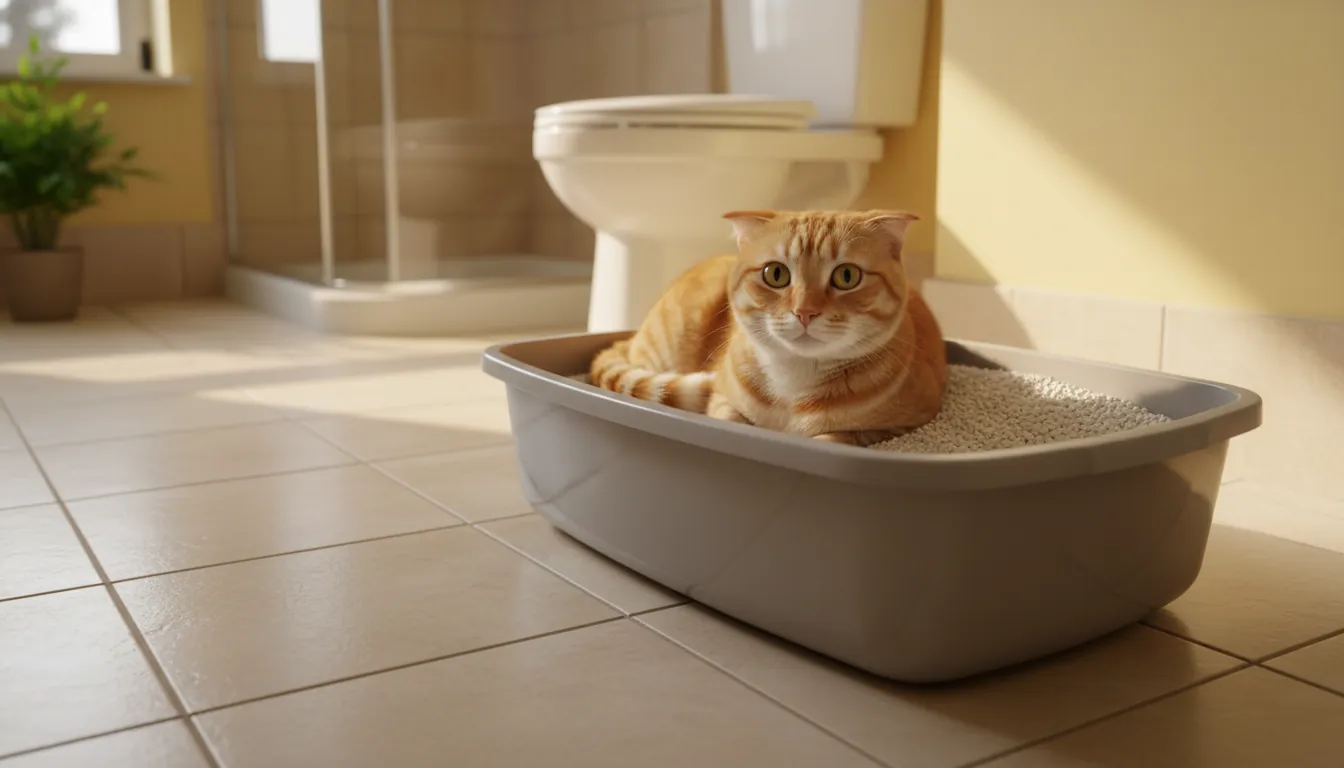
Cats are experts at hiding pain. By the time you notice something is wrong, the UTI may have been developing for days. Here's what to watch for:
| Symptom | What You'll Notice | Urgency |
|---|---|---|
| Frequent trips to litter box | Going to the box every few minutes, producing little or no urine | See vet within 24 hours |
| Straining to urinate | Squatting for a long time, pushing, sometimes crying or meowing | Emergency if no urine produced at all |
| Blood in urine | Pink or reddish-tinged urine in the litter box or on the floor | See vet within 24 hours |
| Urinating outside the litter box | Your previously well-trained cat suddenly peeing on floors, beds, or clothes | See vet within 24 hours |
| Excessive licking of genital area | Constantly grooming around the private area, more than usual | Monitor; see vet if persists |
| Strong-smelling urine | Noticeably stronger or more pungent than usual | Monitor; see vet if combined with other symptoms |
| Lethargy and loss of appetite | Not eating, hiding, less active than normal | See vet within 24 hours |
| Unable to urinate at all | Going to litter box repeatedly, straining, but no urine comes out | EMERGENCY. Go to vet immediately. |
Urinary Blockage: The Emergency Every Cat Owner Must Know
If your cat (especially a male cat) is straining to urinate but nothing is coming out, this is a medical emergency. A complete urinary blockage can cause the bladder to rupture or lead to kidney failure and death within 24-48 hours.
Do not wait to see if it gets better. Do not try home remedies. Go to the nearest vet clinic immediately. If it's after hours, find a 24-hour emergency vet clinic.
| Emergency Signs | What's Happening |
|---|---|
| No urine output for 12+ hours | The urethra is likely fully blocked. Toxins are building up. |
| Crying or yowling when trying to urinate | Your cat is in severe pain from the blockage. |
| Vomiting and lethargy | Toxins accumulating in the bloodstream. Kidneys may be shutting down. |
| Hard, distended abdomen | The bladder is full and cannot empty. Risk of rupture. |
Diagnosis: What to Expect at the Vet
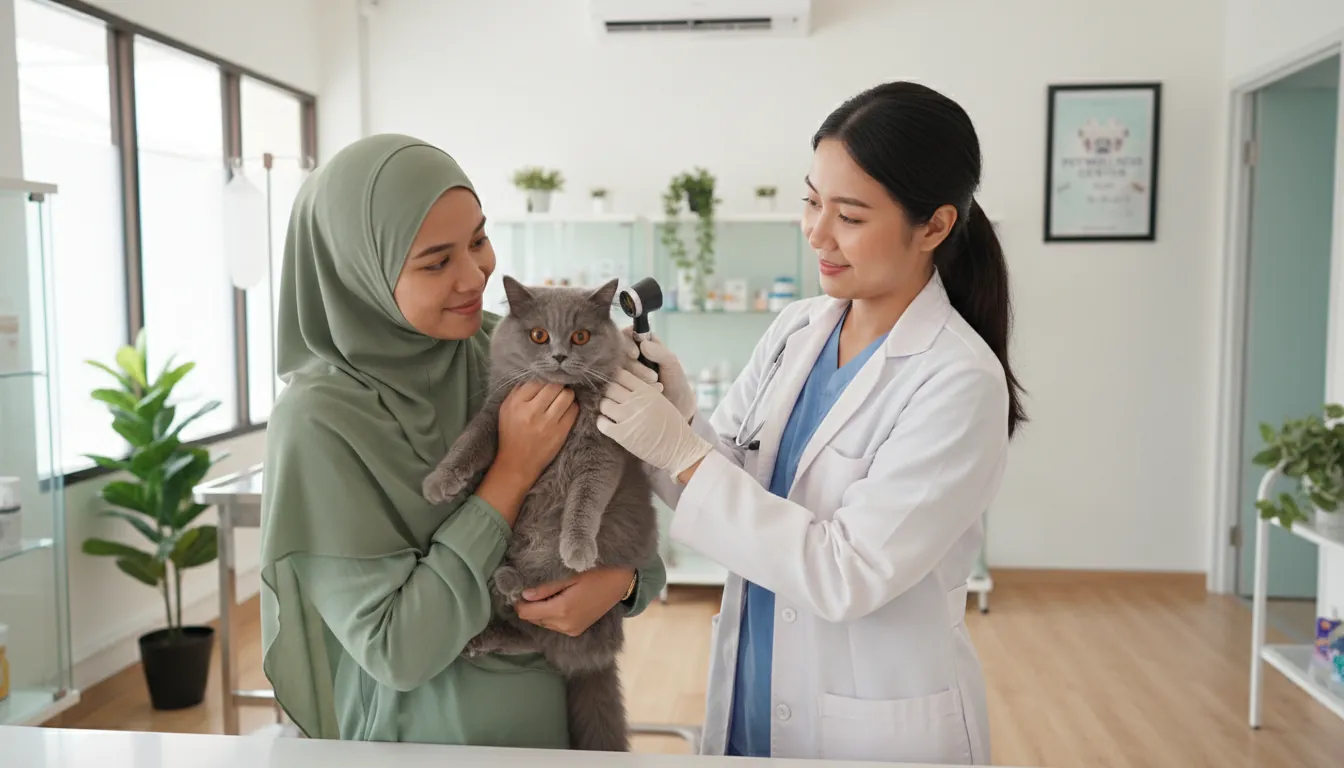
When you bring your cat to the vet with urinary symptoms, here's the typical diagnostic process:
| Test | Purpose | Estimated Cost (Private Clinic) |
|---|---|---|
| Physical examination | Check for bladder distension, pain, and general condition | RM40-80 (consultation fee) |
| Urinalysis | Check for bacteria, crystals, blood, pH levels | RM80-200 |
| Blood test (CBC, kidney panel) | Assess kidney function and overall health | RM150-350 |
| Ultrasound | Visualise bladder for stones, thickening, or masses | RM150-400 |
| X-ray | Detect bladder stones (some types visible on x-ray) | RM100-250 |
| Urine culture | Identify specific bacteria and which antibiotics will work | RM150-300 |
Costs are estimates based on typical Malaysian private vet clinic pricing. Actual costs vary by clinic, location, and your cat's specific situation.
Not every test will be done for every case. A simple UTI might only need a consultation, urinalysis, and antibiotics. A suspected blockage or recurring UTI will need more comprehensive testing.
Treatment Options and Costs
Treatment depends on what's causing the urinary problem. Here's what each scenario typically looks like:
| Condition | Typical Treatment | Estimated Total Cost |
|---|---|---|
| Simple bacterial UTI | Antibiotics (7-14 days), pain medication, urinalysis | RM300-800 |
| UTI with blood work and imaging | Antibiotics + blood test + ultrasound/x-ray | RM800-1,500 |
| Bladder crystals (mild) | Prescription diet, medication, monitoring | RM500-1,200 |
| Urinary blockage (catheterisation) | Emergency catheter, IV fluids, 2-5 days hospitalisation | RM1,500-4,000 |
| Bladder stone surgery (cystotomy) | Surgical removal of stones + recovery | RM2,000-5,000 |
| Perineal urethrostomy (PU surgery) | Surgery to widen the urethral opening (for cats with recurring blockages) | RM3,000-6,000+ |
Costs are estimates based on typical Malaysian private vet clinic pricing as of 2026. Government vet clinics (DVS) offer significantly lower rates but may have longer wait times and limited hours.
The total bill for a urinary blockage can be one of the most expensive non-surgical vet emergencies. A typical scenario: emergency consultation, catheterisation, IV fluids, blood work, medication, and 3-5 nights of hospitalisation. That adds up fast.
Worried about unexpected vet bills? 🐾
With Oyen Pet Insurance, you can claim up to 90% of vet bills at any licensed clinic in Malaysia — from as low as RM30.60/month.
Policy terms and conditions apply.
Risk Factors for Cat UTI in Malaysia
| Risk Factor | Why It Matters |
|---|---|
| Low water intake | Concentrated urine promotes crystal and bacteria growth. Cats on dry-food-only diets are particularly at risk. |
| Indoor-only lifestyle | Less activity, more stress, and cats may hold their urine if the litter box isn't clean enough |
| Stress | Stress triggers feline idiopathic cystitis. Multi-cat households, changes in routine, or new pets can be stressors. |
| Obesity | Overweight cats have higher risk of urinary issues. Managing your cat's weight helps. |
| Male cats | Higher risk of urethral blockage due to narrower urethra |
| Age (middle-aged cats) | Cats between 2-6 years are at highest risk for FLUTD |
| Diet high in minerals | High magnesium, phosphorus, and calcium can promote crystal formation |
Malaysia's hot climate actually makes dehydration worse. Cats who don't drink enough water produce more concentrated urine, which increases the risk of crystals and infections. This is why wet food and constant access to fresh water are so important here.
How to Reduce the Risk of UTI
| Prevention Strategy | How to Do It |
|---|---|
| Increase water intake | Add a water fountain (cats prefer running water), place multiple water bowls around the house, add water to dry food, or include wet food in their diet |
| Keep litter box clean | Scoop daily, full clean weekly. One box per cat plus one extra. Dirty boxes make cats hold their urine. |
| Reduce stress | Provide hiding spots, vertical space (cat trees), separate resources in multi-cat homes, maintain consistent routines |
| Maintain healthy weight | Follow feeding guidelines, encourage play and activity |
| Consider urinary health diet | Brands like Royal Canin Urinary Care help maintain optimal urine pH. Ask your vet if this is appropriate for your cat. |
| Regular vet check-ups | Annual check-ups can catch early signs before they become serious. A urinalysis at the yearly visit is a good practice. |
Is Cat UTI Covered by Pet Insurance?
UTI treatment is generally covered under Oyen's pet insurance, as it's not on the exclusions list. The consultation, diagnostic tests (blood work, urinalysis, ultrasound), prescribed medication, and hospitalisation for a UTI or urinary blockage are all eligible items, subject to review by the claims team.
| Item | Generally Covered? | Notes |
|---|---|---|
| Consultation fee | Yes | Subject to claims review |
| Urinalysis and blood tests | Yes | Diagnostic tests are covered |
| Antibiotics and prescribed medication | Yes | Medication must be named on itemised bill |
| IV fluids and hospitalisation | Yes | Subject to overnight stay limits on your plan |
| Emergency catheterisation | Yes | Subject to claims review |
| Bladder stone surgery | Yes | Subject to claims review |
| Supplements (e.g., probiotics, Cystaid) | No | Supplements are excluded |
| Prescription diet food | No | Pet food is excluded |
Important: The condition must not be pre-existing, and the first symptoms must appear after your waiting period has ended (30 days for conventional plans, 14 days for takaful). The claims team evaluates the underlying illness first before reviewing the bill line by line. For a detailed explanation of how claims work, see our claims guide.
UTI Claim Example
Takaful Kucing is no longer open to new sign-ups. This example is for existing certificate holders.
Say your cat is diagnosed with a bacterial UTI. The vet bill totals RM1,200. Here's how a claim looked for an existing Takaful Kucing certificate holder:
| Item | Amount | Eligible? |
|---|---|---|
| Consultation | RM60 | Yes |
| Urinalysis | RM150 | Yes |
| Blood test (kidney panel) | RM250 | Yes |
| Ultrasound | RM200 | Yes |
| Antibiotics (Amoxicillin) | RM120 | Yes |
| Anti-inflammatory | RM80 | Yes |
| IV fluids | RM150 | Yes |
| Cystaid supplement | RM90 | No (supplement) |
| Prescription urinary diet | RM100 | No (pet food) |
| Total bill | RM1,200 | |
| Eligible amount | RM1,010 | |
| Deductible (10% or RM100, whichever higher) | RM101 | |
| You receive | ~RM909 |
This is an illustrative example only. Actual claim outcomes depend on individual policy terms and claims team review. No claim outcome can be confirmed before formal submission and review.
FAQ
How common is UTI in cats?
Urinary issues are one of the top reasons cats visit the vet in Malaysia. FLUTD (which includes UTIs, crystals, and blockages) affects an estimated 1-3% of cats each year. Male cats are at higher risk for the most dangerous form: urethral blockage.
Can a cat UTI go away on its own?
Some mild cases of feline idiopathic cystitis (bladder inflammation without bacteria) may resolve on their own within a few days. But a true bacterial UTI needs antibiotics. And if there's any straining or inability to urinate, you should see a vet immediately. Don't gamble on it.
How much does it cost to treat cat UTI in Malaysia?
A simple UTI with consultation, urinalysis, and antibiotics typically costs RM300-800 at a private clinic. Cases requiring blood work and imaging can reach RM800-1,500. Urinary blockage with hospitalisation can cost RM1,500-4,000 or more. Government vet clinics offer lower rates.
Is urinary blockage in cats an emergency?
Yes, absolutely. A complete urinary blockage is one of the most time-sensitive emergencies in feline medicine. Without treatment, toxins build up in the blood, kidneys can fail, and the bladder can rupture. If your cat (especially a male) cannot urinate at all, go to the vet immediately.
Can I prevent my cat from getting UTI?
You can reduce the risk significantly. Keep fresh water available at all times (water fountains work well), include wet food in the diet, maintain a clean litter box, manage stress in multi-cat households, and keep your cat at a healthy weight. Annual vet check-ups help catch early warning signs.
Is cat UTI treatment covered by insurance?
UTI treatment is generally covered under Oyen's pet insurance, subject to review by the claims team. Consultation, diagnostics, medication, and hospitalisation are eligible. Supplements and prescription diets are excluded. The condition must not be pre-existing and first symptoms must appear after the waiting period. See the exclusions list for full details.
My cat keeps getting UTIs. What should I do?
Recurring UTIs suggest an underlying issue. Your vet may recommend a urinalysis and urine culture to identify the specific bacteria involved, imaging to check for bladder stones, and possibly a prescription urinary health diet. Increasing water intake and reducing stress are also important. Some cats with recurring blockages may need PU surgery to widen the urethra.
Does diet affect cat UTI risk?
Yes. Cats on dry-food-only diets produce more concentrated urine, which increases the risk of crystals and infections. Including wet food in the diet helps dilute urine. Some prescription diets (like Royal Canin Urinary S/O) are specifically formulated to maintain optimal urine pH and prevent crystal formation.
Protecting Your Pet Starts Here
Urinary issues can escalate from "something seems off" to a RM3,000+ emergency in a matter of hours. Having insurance means you can make the right medical decision for your cat without agonising over the cost.
Oyen covers over 1,000 illnesses and injuries, including UTIs and urinary blockages, at any licensed vet clinic in Malaysia. Plans start from RM28/month for cats.
Check your pet's eligibility now - it takes less than 2 minutes.