
Disclaimer: This article provides general guidance on pet first aid preparedness in Malaysia. First aid is not a substitute for veterinary care. Always consult a licensed veterinarian as soon as possible in any emergency.
It's a Sunday night. Your cat just cut her paw on a broken tile, and the nearest vet doesn't open until Monday morning. You look around the house for something to clean the wound and stop the bleeding. Tissue paper? A random plaster? You don't have saline solution, gauze, or anything designed for pet first aid.
This guide shows you exactly what to put in a pet first aid kit, where to buy each item in Malaysia, and how to use them when your cat or dog needs help.
Here's what we'll cover:
- The full first aid kit checklist
- What each item is for and how to use it
- Where to buy supplies in Malaysia
- How to organise and maintain your kit
- A printable emergency contact card
The Full Pet First Aid Kit Checklist
| Category | Item | Estimated Cost (RM) |
|---|---|---|
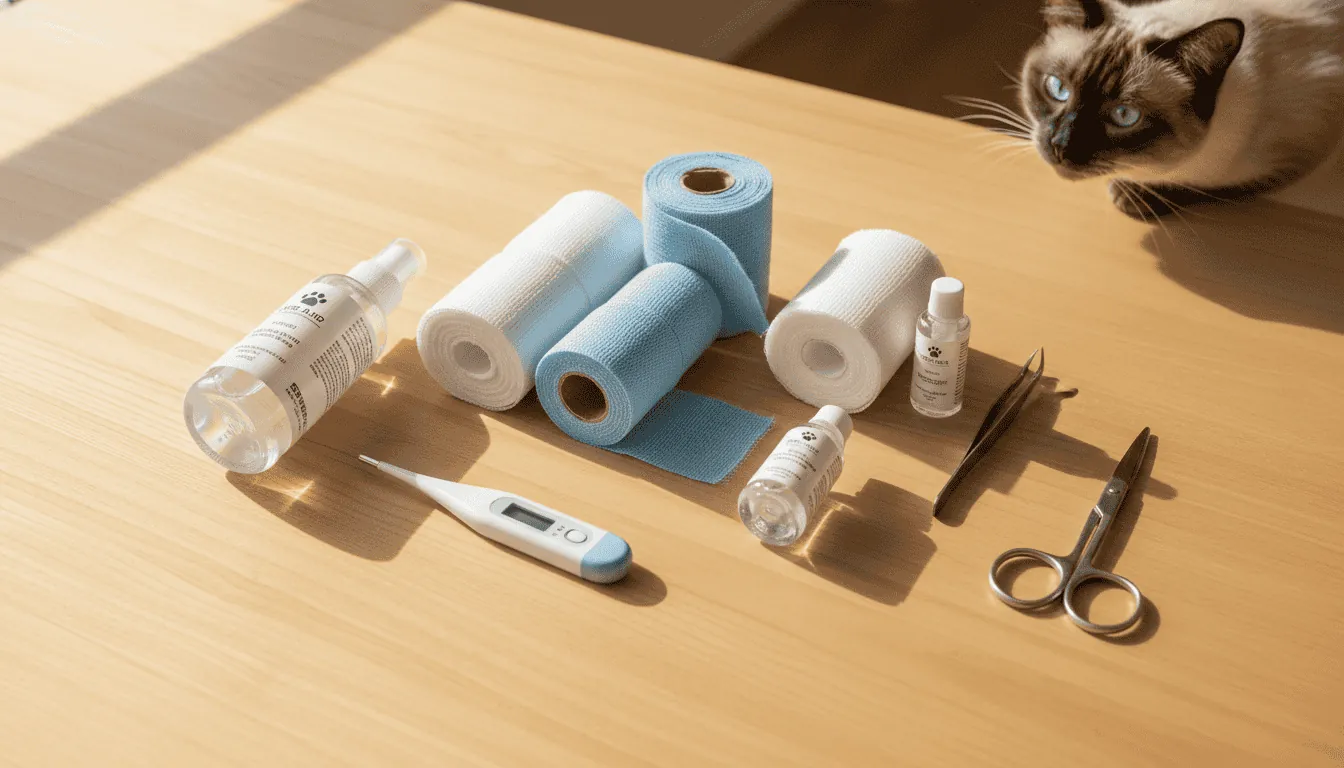
| Wound care | Sterile gauze pads (various sizes) | RM5-15 |
| Self-adhesive bandage wrap (vet wrap / cohesive bandage) | RM5-12 | |
| Saline solution (for flushing wounds and eyes) | RM8-15 | |
| Pet-safe antiseptic spray or chlorhexidine solution | RM15-30 | |
| Tools | Blunt-tip scissors (for cutting bandages) | RM8-20 |
| Tweezers (for ticks or splinters) | RM5-15 | |
| Digital rectal thermometer | RM15-30 | |
| Protection | Disposable latex/nitrile gloves | RM8-15 (box) |
| Clean towels (2-3 small ones) | RM10-20 | |
| E-collar (cone of shame) that fits your pet | RM15-40 | |
| Transport | Spare pet carrier or sturdy box | RM30-80 |
| Blanket or large towel (for wrapping/warmth) | RM15-30 | |
| Slip leash (for dogs) | RM10-25 | |
| Information | Emergency contact card (vet, 24-hour clinic, Oyen) | Free (make your own) |
| Copy of your pet's vaccination card and insurance policy number | Free (photocopy) |
Estimated total cost: RM150-350. Most items can be purchased from a pharmacy, pet shop, or online. You probably already have some of these at home.
What Each Item Is For
Wound Care Supplies
| Item | When to Use | How to Use |
|---|---|---|
| Gauze pads | Bleeding wounds, cuts, abrasions | Place over wound and apply firm pressure for 3+ minutes. If blood soaks through, add more layers on top. Don't remove the first layer. |
| Self-adhesive bandage | Wrapping wounds after bleeding slows, securing gauze | Wrap firmly but not too tight (you should be able to slip a finger underneath). Sticks to itself, not to fur. Replace every 12-24 hours. |
| Saline solution | Flushing dirt from wounds, rinsing eyes | Gently flush the wound or eye with a steady stream. Not a disinfectant, just a safe cleanser. |
| Antiseptic spray | Cleaning minor wounds after flushing | Apply to cleaned wound. Use pet-safe products only. Never use Dettol, hydrogen peroxide, or alcohol on pet wounds (they damage tissue). |
Tools
| Item | When to Use | How to Use |
|---|---|---|
| Blunt-tip scissors | Cutting bandages, trimming fur around wounds | Blunt tips prevent accidentally cutting your pet's skin. Keep them sharp enough to cut bandage material cleanly. |
| Tweezers | Removing ticks, splinters, or visible foreign objects | Grasp ticks as close to the skin as possible and pull straight out steadily. Don't twist. For splinters, pull in the direction of entry. |
| Digital thermometer | Checking for fever or hypothermia | Rectal temperature is most accurate. Normal range: 38.0-39.2°C for cats, 37.5-39.2°C for dogs. Above 39.5°C indicates fever. Below 37°C is hypothermia. |
Normal Vital Signs for Cats and Dogs
| Vital Sign | Cat | Dog |
|---|---|---|
| Normal temperature | 38.0-39.2°C | 37.5-39.2°C |
| Heart rate (resting) | 120-140 beats/min | 60-140 beats/min (varies by size) |
| Breathing rate (resting) | 20-30 breaths/min | 10-30 breaths/min |
| Gum colour (healthy) | Pink. Pale, white, blue, or bright red gums are abnormal. | |
Worried about unexpected vet bills? 🐾
With Oyen Pet Insurance, you can claim up to 90% of vet bills at any licensed clinic in Malaysia — from as low as RM30.60/month.
Policy terms and conditions apply.
Where to Buy Pet First Aid Supplies in Malaysia
| Where | What to Get There | Notes |
|---|---|---|
| Pharmacy (Guardian, Watsons, Caring) | Gauze, bandages, saline, scissors, thermometer, gloves, tweezers | Most wound care supplies are human-grade and work fine for pets too |
| Pet shop (Pet Lovers Centre, Pet Safari) | Pet-safe antiseptic, e-collar, pet carrier, pet thermometer | Get pet-specific antiseptic here (not Dettol from the pharmacy) |
| Online (Shopee, Lazada) | Pre-made pet first aid kits, self-adhesive bandage rolls, pet carriers | Pre-made kits range from RM50-150 but often miss key items. Better to build your own. |
| Your vet clinic | Chlorhexidine solution, prescription items, advice on what to include | Ask your vet what they'd recommend for your specific pet |
How to Organise Your Kit
| Tip | Why |
|---|---|
| Use a waterproof container or bag | Keeps supplies dry and clean. A small waterproof bag or plastic box works well. |
| Store in an accessible spot | Everyone in the household should know where it is. Don't bury it in the back of a cupboard. |
| Label the outside clearly | Mark it "PET FIRST AID" so anyone can find it fast in an emergency. |
| Check every 6 months | Replace expired items, restocked used items, and update emergency numbers. |
| Keep a smaller travel kit in the car | Emergencies don't always happen at home. Gauze, bandage, saline, and a towel fit in a small pouch. |
Your Emergency Contact Card
Write this on a card and keep it in your kit and on your fridge.
| Contact | Number |
|---|---|
| My regular vet clinic | [Fill in] |
| Nearest 24-hour emergency vet | [Fill in] (See our emergency vet directory) |
| Animal Medical Centre KL (24hr) | +603-4042 6742 |
| Oyen customer support | WhatsApp (check your policy for number) |
| Pet's insurance policy number | [Fill in] |
| Pet taxi service | [Fill in] (See our pet taxi guide) |
What NOT to Use on Your Pet
Some common household items that are safe for humans are dangerous for pets.
| Don't Use | Why Not | Use Instead |
|---|---|---|
| Dettol or TCP | Contains phenol, which is toxic to cats (and harmful to dogs in concentrated form) | Pet-safe antiseptic or dilute chlorhexidine |
| Hydrogen peroxide (on wounds) | Damages healthy tissue and delays healing | Saline solution for flushing, then pet-safe antiseptic |
| Paracetamol (Panadol) | Fatal to cats. Can cause liver failure and death even in small doses. | Nothing. Never give human pain medication. See a vet. |
| Ibuprofen (Advil/Nurofen) | Causes kidney failure in cats and dogs | Nothing. Only use vet-prescribed pain medication. |
| Rubbing alcohol | Painful on open wounds, damages tissue, toxic if licked | Saline solution |
| Adhesive bandages (plasters) | Stick to fur, painful to remove, and don't stay in place on pets | Self-adhesive cohesive bandage (sticks to itself, not fur) |
Quick First Aid Reference
Keep this with your kit for quick reference during an emergency.
| Emergency | First Response (While Getting to Vet) |
|---|---|
| Bleeding wound | Gauze + firm pressure for 3+ minutes. Add layers if needed. Wrap once bleeding slows. |
| Suspected poisoning | Call vet immediately. Bring packaging. Do NOT induce vomiting unless instructed. |
| Burns | Cool water for 10 minutes. Cover loosely with damp cloth. No ice, no butter. |
| Heatstroke | Move to shade. Cool (not cold) water on body. Wet towels on neck, armpits, groin. |
| Seizure | Clear area of objects. Don't restrain. Time it. Record video. Call vet after it stops. |
| Eye injury | Flush gently with saline. Don't rub or press on the eye. E-collar to prevent scratching. |
| Tick found | Grasp with tweezers close to skin. Pull straight out steadily. Clean area with antiseptic. |
For detailed step-by-step instructions for each emergency type, see our pet emergency first response guide.
FAQ
How much does a pet first aid kit cost in Malaysia?
About RM150-350 if you build it yourself from a pharmacy and pet shop. Pre-made kits on Shopee/Lazada range from RM50-150 but often miss key items. Building your own lets you customise for your pet's size and needs.
Can I use human first aid supplies on my pet?
Some items are the same (gauze, bandages, saline, gloves, scissors). But never use human medications (paracetamol, ibuprofen), Dettol, hydrogen peroxide, or rubbing alcohol on pets. Use pet-safe antiseptic instead.
What's the most important item in a pet first aid kit?
Your vet's emergency phone number. No supply replaces professional care. After that, gauze and self-adhesive bandage for bleeding control are the most commonly needed items in real emergencies.
Should I keep a first aid kit in my car?
Yes, especially if you travel with your pet or live far from a vet. A small kit with gauze, bandage, saline, a towel, and emergency numbers fits in a small bag. Emergencies don't always happen at home.
How do I take my cat's temperature?
Rectal temperature is most accurate. Use a digital thermometer with lubricant (petroleum jelly or water-based). Insert gently about 2cm and wait for the reading. Normal for cats: 38.0-39.2°C. Above 39.5°C is a fever. This is easier with two people.
Is Dettol safe for cleaning pet wounds?
No. Dettol contains phenol, which is toxic to cats and can be harmful to dogs. Use saline solution to flush wounds, then pet-safe antiseptic or dilute chlorhexidine (ask your vet for the right concentration).
What should I do if I can't find all the items?
Start with the basics: gauze, self-adhesive bandage, saline, and a towel. You can add items over time. Something is always better than nothing. The most commonly needed items in real emergencies are wound care supplies and a way to transport your pet.
Does pet insurance cover emergency vet visits?
Yes. Oyen covers emergency vet visits at any licensed clinic in Malaysia. Accident claims are covered from Day 1 with no waiting period. A first aid kit helps you stabilise your pet while getting to the vet, and insurance helps with the bill when you get there.
How often should I check my first aid kit?
Every 6 months. Check for expired items (antiseptic, saline solution), restock anything you've used, and update emergency phone numbers. A good habit is to check it when you change your smoke alarm batteries or at the start of each year.
Can I use the same first aid kit for cats and dogs?
Yes. The supplies are the same for both. The main difference is sizing (smaller bandages for cats, larger for big dogs). If you have both, keep a variety of gauze and bandage sizes in your kit.
Protecting Your Pet Starts Here
A first aid kit costs RM150-350 and lasts for years. It won't replace a vet, but it can keep your pet stable in those critical minutes between an emergency and getting professional help. Pair it with pet insurance, and you're covered for both the immediate response and the vet bill that follows.
Oyen covers cats and dogs at any licensed vet in Malaysia. Accident claims are covered from Day 1, with coverage up to RM10,000/year.
Check your pet's eligibility now - it takes less than 2 minutes.
About the products listed here
We put this list together from public sources and our own research, and we update it when we can. Prices, availability, formulations and specifications change without notice, and we don't have direct access to each brand's internal information. Please check the current details with the seller or brand before you buy. If something here is out of date, or you represent a brand listed on this page and would like your details corrected, email us at hello@oyen.my and we'll update it.