
Disclaimer: This article provides general guidance on moving house with pets in Malaysia as of February 2026. Always consult a licensed veterinarian for medical advice specific to your pet's needs.
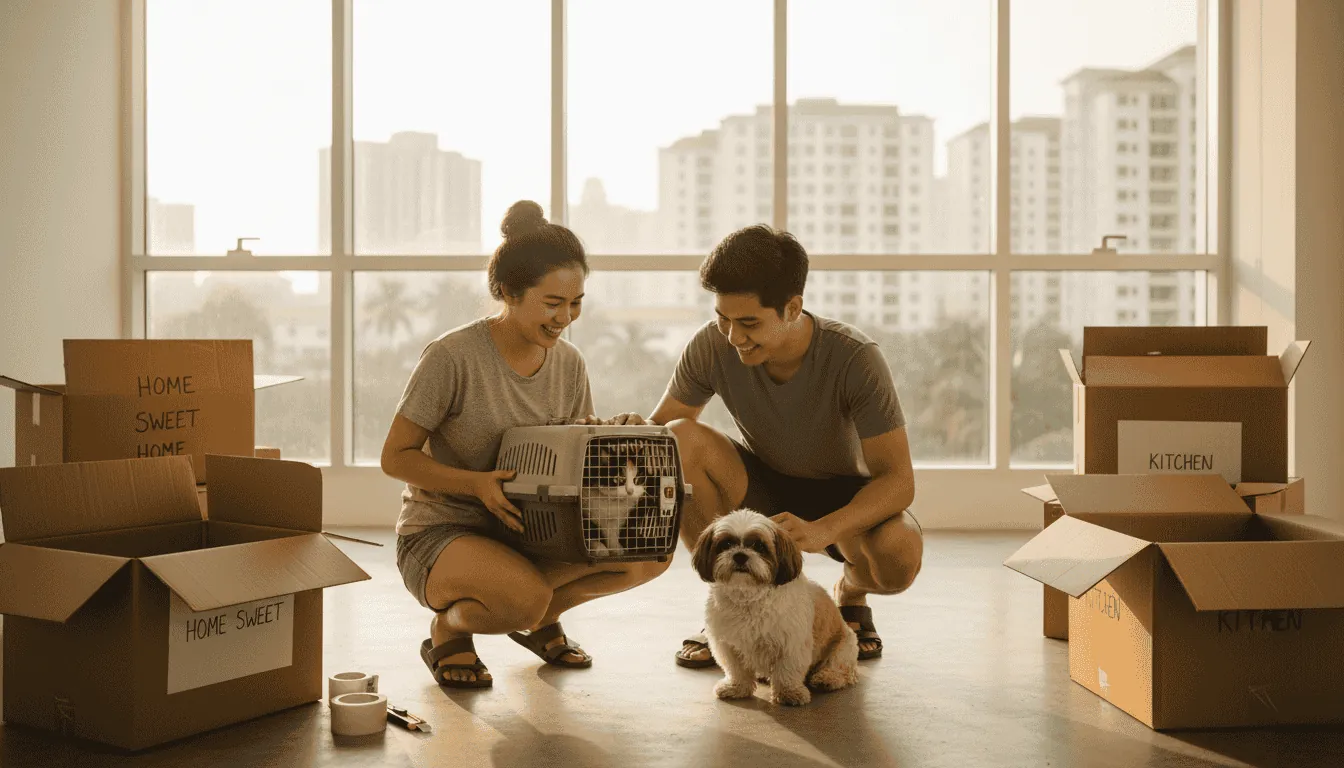
You've found a new place. The boxes are piling up. But your cat has been hiding under the bed since you started packing, and your dog is following you room to room with anxious eyes. Moving is stressful for you. For your pet, it can be even worse.
This guide covers everything you need to do before, during, and after your move to keep your pet safe, calm, and settled in their new home.
Here's what we'll cover:
- Why moving is so stressful for pets (especially cats)
- Before the move: preparing your pet
- Moving day: keeping your pet safe
- After the move: settling in
- Updating your records (vet, insurance, microchip)
- Special considerations for condos and landed homes
Why Moving Is Hard on Pets
| Stressor | Cats | Dogs |
|---|---|---|
| Disrupted territory | Cats are territorial. Their entire sense of security is tied to their environment. A new space means every scent marker is gone. | Dogs are more adaptable but still disoriented by a new space with unfamiliar smells and sounds. |
| Packing chaos | Boxes, strangers, furniture being moved. Everything familiar is disappearing. | Picks up on your stress. Unusual activity triggers anxiety. |
| Travel | Most cats don't enjoy car rides. The carrier alone can trigger stress. | Most dogs handle travel better but may get motion sickness or anxious. |
| New environment | New smells, sounds, and layout. May hide for days or weeks. | New territory to explore, but may be restless or clingy initially. |
Cats are generally more affected by moves than dogs. While dogs look to you for security and adapt more quickly, cats derive their comfort from their environment. Expect your cat to need more time and patience during the transition.
Before the Move: Preparation
2-4 Weeks Before
| Task | Details |
|---|---|
| Get your carrier out early | Leave the carrier open in your home with a familiar blanket inside. Let your pet get used to it before moving day. This reduces the "carrier = vet" panic. |
| Visit your current vet | Schedule a check-up, especially if your pet has ongoing conditions. Ask about anti-anxiety options if your pet is prone to travel stress. Get copies of medical records. |
| Research vets near your new home | Find a vet clinic and a 24-hour emergency option near your new address. Don't wait until you need one. See our vet directories for KL/Selangor, Penang, Johor, and Ipoh. |
| Check your new home's pet rules | If moving to a condo, verify pet policies (breed restrictions, weight limits, registration requirements). Some condos require a pet deposit. |
| Update microchip details (dogs) | If your dog is microchipped, update the registered address. This is especially important if you're moving to a new municipality where dog licensing requirements may differ. |
| Stock up on familiar items | Buy extra of your pet's current food, litter, and treats. Changing brands during a move adds unnecessary stress. Don't switch food at the same time as moving. |
1 Week Before
| Task | Details |
|---|---|
| Set up a "safe room" | Designate one room in your current home that stays packed last. Keep your pet there on moving day with food, water, litter, and familiar bedding. |
| Pack pet items last | Your pet's food bowls, bed, litter box, and toys should be the last things packed and the first things unpacked at the new home. |
| Prepare a moving day bag | Separate bag with: food, water, bowls, litter + tray (cats), medications, treats, poop bags (dogs), towels, carrier, vaccination card, and emergency vet number. |
Moving Day: Keeping Your Pet Safe
| Tip | Details |
|---|---|
| Keep your pet in the safe room | Keep the door closed with a sign that says "PET INSIDE - DO NOT OPEN." Movers and helpers may not know your pet is there. This prevents escape during the chaos. |
| Move your pet last | Your pet should be the last thing to leave the old home and the first priority at the new one. Don't transport them in the moving truck. |
| Use a carrier for transport | Always use a secure carrier in the car. Never let a stressed cat or dog loose in a moving vehicle. Cover the carrier with a light cloth to reduce visual stress for cats. |
| Keep the car cool | In Malaysia's heat, run the air-conditioning before putting your pet in the car. Never leave pets in a parked car, even for a few minutes. |
| Don't sedate without vet guidance | If your pet needs anti-anxiety help, consult your vet beforehand. Don't give sedatives without professional guidance, especially for older pets. |
If you're moving a long distance or don't have a car, consider a pet taxi service. They have proper carriers and air-conditioned vehicles designed for pet transport.
Worried about unexpected vet bills? 🐾
With Oyen Pet Insurance, you can claim up to 90% of vet bills at any licensed clinic in Malaysia — from as low as RM30.60/month.
Policy terms and conditions apply.
After the Move: Settling In
The First 24 Hours
| For Cats | For Dogs |
|---|---|
| Set up one small room as your cat's "home base." Include food, water, litter box, a bed, and a hiding spot (a box or a covered bed). | Walk your dog around the new home on a leash so they can explore in a controlled way. |
| Don't force your cat out of the carrier or hiding spot. Let them come out on their own terms. | Set up their bed, bowls, and toys in a consistent spot. Dogs feel more secure with routine. |
| Keep doors and windows closed. A stressed cat in a new environment may bolt and get lost. | Take your dog outside on a leash to explore the immediate neighbourhood. Establish a toilet routine. |
| Put familiar-smelling items in the room (a worn T-shirt of yours, their old bed or blanket). | Maintain your usual feeding and walking schedule as closely as possible. |
The First 1-2 Weeks
| Behaviour | Normal or Concern? |
|---|---|
| Hiding for the first few days | Normal (especially cats). Give them time. Don't drag them out. |
| Eating less than usual | Normal for 1-3 days. If your cat hasn't eaten for 48+ hours, see a vet (risk of fatty liver). |
| Meowing or barking more than usual | Normal. They're disoriented. Extra attention and routine helps. |
| Toileting outside the litter box (cats) | Normal initially. Make sure the litter box is in a quiet, accessible spot. Use the same litter brand. |
| Clinginess or following you constantly | Normal. You're their one constant in a new environment. Be patient. |
| Vomiting, diarrhoea, or refusal to eat for 3+ days | See a vet. Stress can trigger real illness. Don't assume it's "just the move." |
For cats, gradually expand their territory. After a few days in their safe room, open the door and let them explore one additional room at a time. Don't rush this process. Some cats take a few days, others take a few weeks. For more on cat stress, see our indoor cat guide.
Updating Your Records
Moving house means updating several important records. Here's your checklist.
| What to Update | How | Why It Matters |
|---|---|---|
| Oyen account address | Update your address in your Oyen account dashboard | Ensures your policy records are current |
| Microchip registration (dogs) | Update registered address with the microchip database | If your dog gets lost, the microchip is how they're traced back to you |
| Dog license | Check if your new local council (MBPJ, DBKL, MPK, etc.) requires a new license or transfer. See our dog license guide. | Dog licensing requirements vary by municipality. Some require re-registration when you move. |
| Vet records transfer | Ask your old vet for a copy of your pet's medical records. Share them with your new vet. | Your new vet needs to know your pet's medical history, vaccinations, and any ongoing conditions. |
| Emergency contacts | Save the phone number of your new nearest vet and 24-hour emergency clinic | You don't want to be searching for a new vet at 2am |
Pet-Proofing Your New Home
For Condos and Apartments
| Hazard | What to Do |
|---|---|
| Windows and balconies | Install mesh or netting on all windows and balcony openings. High-rise falls are one of the most common cat emergencies in Malaysia. See our pet-friendly condo guide. |
| Washing machine | Always check inside before running. Cats love climbing into warm, enclosed spaces. |
| Gaps behind appliances | Block gaps behind the fridge, washing machine, and oven. Stressed cats will find the smallest hiding spot. |
| Household chemicals | Store cleaning products in closed cabinets. Bleach, insecticides, and rat poison are common pet poisoning risks. |
For Landed Homes
| Hazard | What to Do |
|---|---|
| Fence and gate security | Check for gaps in fences and gates. Dogs can squeeze through smaller gaps than you'd expect. Cats can climb most fences. |
| Garden plants | Check for toxic plants: lilies (fatal to cats), sago palm, oleander, and dieffenbachia are common in Malaysian gardens. See our safe plants guide. |
| Open drains | Malaysian landed homes often have open monsoon drains. Cover or fence off access, especially for small dogs and kittens. |
| Stray animals | If your area has stray dogs or cats, don't let your pet out unsupervised until you know the territory. Fights with strays can lead to injury and disease. |
Moving Between States
If you're moving interstate in Malaysia (e.g., KL to Penang, Johor to Sabah), keep these additional points in mind.
| Consideration | Details |
|---|---|
| Long-distance transport | For drives over 2 hours, stop every 1.5-2 hours for water breaks. Keep the car cool. Avoid feeding a big meal before travel to reduce motion sickness. |
| Peninsular to East Malaysia | Flying with your pet requires airline-approved carriers and health documentation. See our flying with pets guide and East-West relocation guide. |
| Dog licensing | Dog license requirements differ by state and municipality. Check with your new local council. |
| Vet availability | Vet density varies. KL/Selangor has the most options; rural areas and East Malaysia have fewer. Research before you move. |
FAQ
How long does it take for a cat to adjust to a new home?
Most cats take 1-2 weeks to settle into a new home, but some may take a month or longer. Shy or older cats tend to take longer. Give them a quiet safe room, familiar items, and let them adjust at their own pace.
Should I keep my cat indoors after moving?
Yes, keep indoor-outdoor cats strictly indoors for at least 2-4 weeks after moving. Cats navigate by scent markers, and in a new area they can easily get lost. After the adjustment period, if you decide to let them out, do so gradually and supervised.
My cat hasn't eaten since we moved. When should I worry?
Reduced appetite for 1-2 days is normal from stress. But if your cat hasn't eaten anything for 48 hours, see a vet. Cats can develop hepatic lipidosis (fatty liver disease) from prolonged fasting, which can be life-threatening.
Do I need to update my pet insurance when I move?
Update your address in your Oyen account dashboard. Your coverage remains the same regardless of where you live in Malaysia since Oyen works with any licensed vet clinic nationwide. No need to change plans or re-apply.
How do I transfer my pet's vet records?
Ask your current vet for a copy of your pet's medical history, vaccination records, and any ongoing treatment notes. Most clinics can provide this digitally or as printed records. Share these with your new vet at your first visit.
Can I sedate my pet for the move?
Only with veterinary guidance. Some pets benefit from mild anti-anxiety medication for travel, but sedation carries risks, especially for older pets or those with health conditions. Talk to your vet at least a week before moving day.
My dog is barking non-stop at the new house. What should I do?
Excess barking is usually from anxiety and unfamiliar sounds. Maintain your normal routine, give them plenty of exercise, and keep them close to you. If the barking continues beyond 1-2 weeks, consult your vet about anxiety management options.
Does pet insurance cover stress-related illness from moving?
If stress from moving triggers a covered condition (like a flare-up of a chronic illness or stress-related urinary issues), the treatment is generally covered under Oyen's plan, subject to the usual terms and exclusions list. Pre-existing conditions remain excluded.
What if my new condo doesn't allow pets?
Check the condo's management rules before signing your lease or purchase. Some condos have weight limits, breed restrictions, or require a pet deposit. If you already own a pet, this should be part of your house-hunting criteria. See our pet-friendly condo guide for options.
Should I change my pet's food after moving?
No. Keep everything the same, including food, litter, treats, and feeding schedule. A move is already a major change. Adding a diet change on top of it can cause digestive upset. If you need to switch food for any reason, wait until your pet has fully settled (at least 2-3 weeks) and transition gradually over 7-10 days.
Protecting Your Pet Starts Here
Moving is one of life's most stressful events, for you and for your pet. The weeks surrounding a move are when unexpected vet visits are most likely, whether from stress-related illness, escape attempts, or accidents in an unfamiliar environment. Having pet insurance means one less thing to worry about during the transition.
Oyen covers cats and dogs at any licensed vet in Malaysia, no matter where you move. Coverage up to RM10,000/year, with accident protection from Day 1.
Check your pet's eligibility now - it takes less than 2 minutes.