
Disclaimer: This article provides general guidance on understanding vet bills in Malaysia as of February 2026. Costs vary by clinic, location, and severity. Always consult a licensed veterinarian for medical advice about your pet.
You've just picked up your cat from the vet after a 2-day stay for a stomach infection. The bill is RM1,800, and it's a full page of charges. Consultation, blood test, IV fluids, three medications you can't pronounce, overnight boarding, and something called "E-collar." What does it all mean?
This guide walks you through every common line item on a Malaysian vet bill, explains what each one means, tells you which items are typically covered by insurance, and helps you understand why your bill might be higher (or lower) than expected.
Here's what we'll cover:
- How to read your vet bill
- Every common charge explained
- What's covered by insurance vs what's not
- Why bills vary so much between clinics
- How to avoid surprise charges
- What you need on the bill for insurance claims
How to Read a Vet Bill
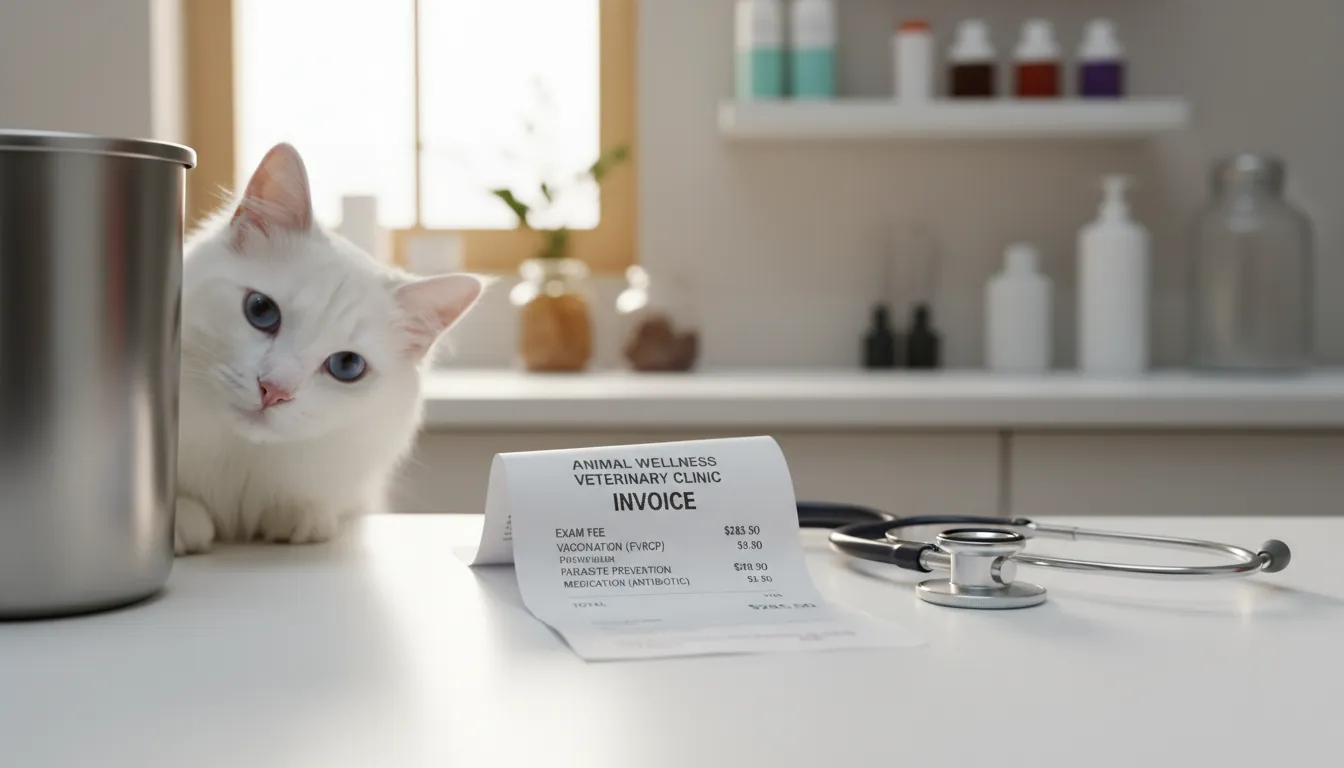
Most vet bills in Malaysia follow a simple structure: a list of services and items with individual prices. But the way clinics present these can vary. Some give you a single "Consultation + Treatment" lump sum. Others break down every syringe and cotton ball.
For insurance claims, the more detailed the better. A line-by-line breakdown with named medications and individual prices is what you want.
| Bill Format | Example | Insurance-Friendly? |
|---|---|---|
| Lump sum | "Consultation + treatment: RM800" | No. Claims team can't assess individual items. |
| Generic labels | "Medication: RM150" | No. Which medication? Can't verify if it's a supplement or a drug. |
| Fully itemised | "Amoxicillin 250mg x 14: RM80" | Yes. This is what you want. |
Pro tip: Before leaving the clinic, ask the receptionist to provide a fully itemised receipt with each medication and treatment listed by name. This saves you from having to go back and ask later when submitting a claim.
Every Common Vet Bill Charge Explained
Here's what you'll typically see on a vet bill in Malaysia, grouped by category:
Consultation and Examination
| Charge | What It Means | Typical Range | Insurance |
|---|---|---|---|
| Consultation fee | The vet's fee for examining your pet and assessing the problem | RM30-120 | Generally covered |
| After-hours / emergency surcharge | Additional charge for visits outside normal hours or at emergency clinics | RM50-200 on top of regular fee | Generally covered |
| Follow-up consultation | Return visit to check progress | RM20-80 | Generally covered |
Diagnostic Tests
| Charge | What It Means | Typical Range | Insurance |
|---|---|---|---|
| Blood test (CBC) | Complete blood count: checks for infection, anaemia, and general health | RM80-200 | Generally covered |
| Blood chemistry panel | Checks organ function: liver, kidneys, glucose, protein levels | RM100-350 | Generally covered |
| Urinalysis | Checks urine for infection, crystals, kidney function | RM80-200 | Generally covered |
| X-ray (radiograph) | Images for bones, bladder stones, foreign objects, chest conditions | RM100-300 per view | Generally covered |
| Ultrasound | Visualises soft tissue: organs, masses, bladder, pregnancy | RM150-400 | Generally covered |
| Snap test (e.g., FIV/FeLV, parvo) | Rapid test kit for specific diseases | RM80-200 | Generally covered |
| Skin scraping | Tests for mange mites, fungal infection | RM50-150 | Generally covered |
Treatment and Medication
| Charge | What It Means | Typical Range | Insurance |
|---|---|---|---|
| Antibiotics (named: Amoxicillin, Clavamox, etc.) | Prescribed medication to fight bacterial infection | RM30-200 | Generally covered |
| Anti-inflammatory (NSAIDs) | Reduces pain and swelling | RM30-150 | Generally covered |
| IV drip / fluids | Intravenous fluids for hydration and medication delivery | RM80-200/session | Generally covered |
| Injection (named: antibiotic, anti-nausea, etc.) | Administered by injection instead of oral medication | RM20-100 | Generally covered |
| Wound cleaning / dressing | Cleaning and bandaging of wounds | RM30-100 | Generally covered |
| Nebulisation | Steam treatment for respiratory conditions | RM30-80/session | Generally covered |
Items Commonly NOT Covered by Insurance
| Charge | What It Is | Why It's Excluded |
|---|---|---|
| Supplements (Pro-kolin, Vetri DMG, Cystaid, etc.) | Vitamins, probiotics, nutritional supplements | All supplements are excluded |
| Medicated shampoo / topical products | Shampoos, skin creams, ear cleansers | Excluded under policy terms |
| Deworming / flea treatment | Preventive parasite treatment | Classified as preventive care |
| Vaccination / booster | Routine vaccinations | Classified as preventive care |
| E-collar (cone) | Plastic cone to prevent licking wounds | Classified as aid/accessory |
| Pet food / prescription diet | Special diet recommended by vet | Pet food is excluded |
| Grooming during stay | Bathing or nail trimming during hospitalisation | Non-medical service |
For the complete list of excluded items, visit the Oyen exclusions page. Understanding this list before you visit the vet helps you know in advance which parts of the bill will come out of your pocket.
Hospitalisation and Surgery
| Charge | What It Means | Typical Range | Insurance |
|---|---|---|---|
| Overnight boarding / hospitalisation | Overnight stay at the clinic for monitoring and treatment | RM50-200/night | Generally covered (subject to plan limits) |
| Anaesthesia | Sedation or general anaesthetic for procedures | RM100-500 | Generally covered (as part of surgery) |
| Surgery (named procedure) | Surgical intervention for the diagnosed condition | RM500-5,000+ | Generally covered (subject to policy terms) |
| Catheterisation | Tube insertion (commonly for urinary blockage) | RM100-400 | Generally covered |
Worried about unexpected vet bills? 🐾
With Oyen Pet Insurance, you can claim up to 90% of vet bills at any licensed clinic in Malaysia — from as low as RM30.60/month.
Policy terms and conditions apply.
A Sample Bill: What's Covered vs What's Not
Let's look at a realistic vet bill for a cat treated for a stomach infection with overnight stay:
| Line Item | Amount | Covered? | Why |
|---|---|---|---|
| Consultation | RM60 | Yes | Vet examination for the illness |
| Blood test (CBC + chemistry) | RM280 | Yes | Diagnostic test |
| Metronidazole injection | RM80 | Yes | Prescribed antibiotic |
| Anti-nausea injection (Cerenia) | RM60 | Yes | Prescribed medication |
| IV fluids (2 sessions) | RM200 | Yes | Treatment for dehydration |
| Overnight boarding (2 nights) | RM200 | Yes | Hospitalisation (subject to plan limits) |
| Oral antibiotics (Clavamox 7 days) | RM100 | Yes | Take-home prescribed medication |
| Pro-kolin (probiotic paste) | RM65 | No | Supplement (excluded) |
| Deworming (Drontal) | RM25 | No | Preventive care (excluded) |
| E-collar (cone) | RM30 | No | Aid/accessory (excluded) |
| TOTAL BILL | RM1,100 | ||
| ELIGIBLE AMOUNT | RM980 |
All coverage subject to claims team review. This is an illustrative example only.
In this example, RM120 of the RM1,100 bill would come out of your pocket regardless (the excluded items). Your reimbursement rate (50%, 70%, or 90%) applies to the remaining RM980 eligible amount. For a detailed walkthrough of how claims are calculated, see the claims guide.
Why Vet Bills Vary So Much Between Clinics
| Factor | Impact on Price |
|---|---|
| Location | Clinics in KL, PJ, and Bangsar typically charge more than clinics in smaller towns. Rent and operating costs differ significantly. |
| Equipment | Clinics with in-house blood machines, digital x-ray, and ultrasound charge for using that equipment. Clinics that send samples to external labs may charge less but take longer. |
| Specialist vs general practice | Specialist vets (dermatology, surgery, internal medicine) command higher fees. |
| 24-hour clinics | Emergency and 24-hour clinics have higher overhead and charge accordingly. |
| Government vs private | Government vet clinics (DVS) are significantly cheaper but have limited hours, longer waits, and fewer services. See our vet cost comparison. |
Tips for Managing Vet Costs
- Ask for an estimate before treatment. For non-emergency situations, ask the vet for an estimated cost breakdown before proceeding. This helps you plan and avoids surprises.
- Request a fully itemised bill. Always ask for every item listed individually with names and prices. This is essential for insurance claims and helps you understand what you're paying for.
- Know your exclusions. Before visiting the vet, familiarise yourself with the insurance exclusions list. This way you know in advance which items on the bill will be your responsibility.
- Don't skip diagnostic tests to save money. It might seem cheaper to skip the blood test, but accurate diagnosis leads to targeted treatment. Guessing at the problem can lead to multiple visits and higher costs overall.
- Ask about generic medication. Some clinics offer generic alternatives to brand-name medications at lower prices, with the same active ingredients.
What Your Bill Needs for a Smooth Insurance Claim
| Must Have on the Bill | Why |
|---|---|
| Your pet's name | Links the treatment to your insured pet |
| Owner's name | Must match the policyholder or authorised person |
| Clinic name and address | For verification and vet follow-up |
| Date of treatment | Confirms treatment during active policy period |
| Each medication named individually | "Amoxicillin 250mg" not "Medication." Claims are reviewed line by line. |
| Individual prices for each item | Each charge must be visible. Lump sums can't be assessed. |
| "PAID" status or "fully settled" | Proves the bill has been paid (not a quotation or deposit) |
FAQ
Why is my vet bill higher than I expected?
Common reasons: diagnostic tests were needed (blood work, imaging), your pet needed overnight hospitalisation, the treatment required multiple medications, or the clinic charges higher rates. Always ask for an estimate before treatment if possible.
Can I get a cheaper rate at a government vet clinic?
Yes. Government vet clinics (DVS) charge significantly lower rates than private clinics. But they have limited operating hours (usually weekday mornings), longer waiting times, and may not offer specialised services like ultrasound or emergency care. For details, see our vet cost comparison guide.
Why are supplements on my vet bill not covered by insurance?
All supplements, vitamins, probiotics, and nutritional products are excluded from pet insurance coverage, even if prescribed by a vet. This includes common items like Pro-kolin, glucosamine, Cystaid, and Vetri DMG. For the complete list, see why supplements aren't covered.
What if my vet won't give me an itemised bill?
Most clinics will provide an itemised bill if you ask. If your regular clinic only gives lump-sum receipts, explain that you need individual items listed with names and prices for your insurance claim. Most vets are familiar with this requirement.
How can I tell which items on my bill will be covered?
Check the exclusions list. Anything not on that list is generally eligible, subject to claims review. The main excluded categories are: supplements, preventive care (vaccines, deworming), pet food, dental, aids/accessories (e-collars, cages), and reproductive procedures.
Does it matter which vet clinic I go to for insurance purposes?
No. Oyen has no panel restriction. You can visit any licensed vet clinic in Malaysia, including specialists, emergency clinics, and government clinics. The claims process is the same regardless of which clinic you use.
Protecting Your Pet Starts Here
Now that you understand how vet bills work, you know that a single illness can easily produce an RM800-2,000 bill. And emergencies can go much higher. Pet insurance means you don't have to choose between your pet's health and your budget.
Oyen covers over 1,000 illnesses and injuries at any licensed vet clinic in Malaysia, with coverage up to RM10,000/year and plans for cats starting from RM28/month.
Check your pet's eligibility now - it takes less than 2 minutes.