
Skin Allergy in Cats Malaysia: Causes, Treatment & Cost (2026 Guide)
If you notice frequent cat scratching, licking, or losing fur, you might be dealing with a skin allergy. In Malaysia’s warm and humid climate, fleas, food, and environmental triggers often cause ongoing skin problems.
Most cat skin allergies in Malaysia come from fleas, food proteins, or environmental allergens. You can manage them with a proper diagnosis, long-term treatment, and consistent care. Costs in 2026 depend on the tests and medication your cat needs, but early treatment usually prevents higher vet bills later.
You need to know the real cause before you choose a treatment. This guide breaks down common triggers, clear signs to watch for, available treatments, and what you can expect to pay in Malaysia.
Key Takeaways
-
Skin allergies in cats often link to fleas, food, or environmental triggers in Malaysia.
-
Proper diagnosis helps you choose the right long-term treatment plan.
-
Early care and prevention reduce flare-ups and ongoing medical costs.
Understanding Skin Allergy in Cats
Skin allergies in cats cause itching, hair loss, and can lead to a painful cat skin infection. You need to know what triggers them and how your cat’s immune system creates these reactions. Here is a quick breakdown of what you might encounter.
|
Allergy Type |
Common Trigger |
Frequency in Malaysia |
|---|---|---|
|
Flea Allergy |
Flea saliva from bites |
Very High (Year-round) |
|
Food Allergy |
Proteins like chicken or beef |
Moderate |
|
Environmental |
Pollen, dust mites, mold |
High due to humidity |
|
Contact |
Shampoos or detergents |
Low |
Skin allergies happen when your cat’s immune system overreacts to a substance that is usually harmless. This overreaction damages the skin and leads to itching, redness, and sores. Many vets group these into four main types.
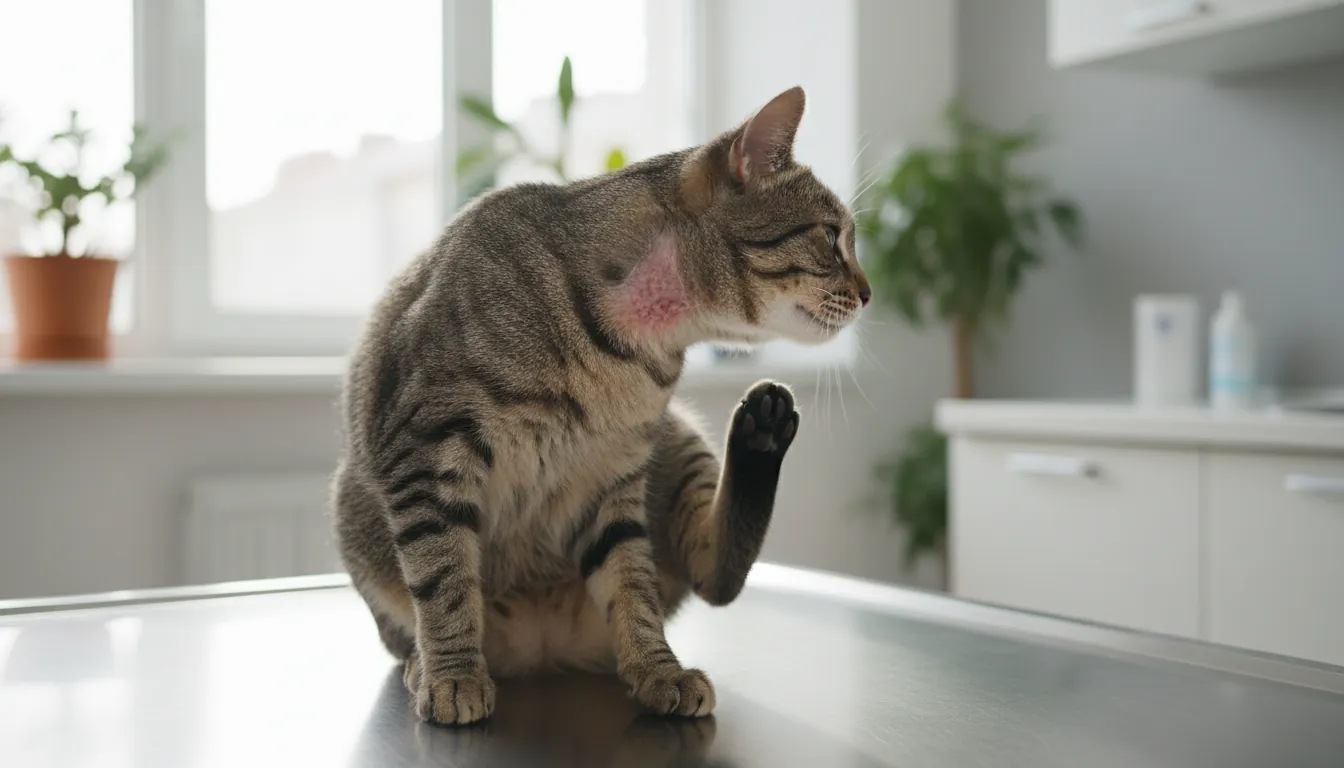
Common signs include excessive cat scratching, over-grooming, bald patches, and scabs. These problems often appear on the neck, ears, base of the tail, or belly. If you see your cat rubbing their face on furniture, that is a big clue too.
The warm and humid climate in Malaysia allows fleas, mites, and mold to thrive all year. Because fleas survive so easily, flea allergy remains the most frequent cause of itching. When you skip regular flea control, your cat faces a higher risk of flare-ups.
Common Causes of Skin Allergies in Malaysian Cats
In Malaysia, parasites and environmental triggers stay active all year. You will most often see skin allergies caused by fleas, airborne allergens, or certain foods. Here are the common culprits:
-
Flea Allergy Dermatitis: A reaction to flea saliva, not just the bite.
-
Atopic Dermatitis: Reactions to dust, mold, or pollen.
-
Adverse Food Reactions: Sensitivity to specific proteins.
Flea allergy is the most common issue. Your cat reacts to proteins in flea saliva, so even one or two bites can trigger intense itching. You might notice constant scratching or hair loss near the tail base.
Environmental allergies happen when your cat reacts to things like dust mites or mold. In Malaysia, high humidity supports mold growth, which can worsen symptoms. Your cat might lick their paws frequently or rub their face on things.
Food allergies develop when the immune system reacts to a specific protein. Common triggers include chicken, beef, or fish. The main sign is non-seasonal itching that does not go away with flea treatment.
Symptoms and Diagnosis of Cat Skin Allergies
You can spot many cat skin problems early if you know what to look for. Clear signs and proper testing help your vet confirm the cause. Here is a checklist of signs to watch for:
-
Red, irritated, or thickened skin patches.
-
Small, crusty bumps (miliary dermatitis).
-
Excessive grooming leading to bald spots.
-
Repeated ear infections or head shaking.
-
Open sores from constant licking and biting.
Diagnosis often starts with skin scraping to check for mites. Vets also use tape or slide tests to look for bacteria or yeast. If those are clear, they move on to flea control trials or food elimination diets.
A food trial requires you to feed only a prescribed diet for 8 to 12 weeks. That means no treats or table scraps at all. If symptoms improve and return after reintroducing old food, you have your answer.
If your cat’s condition does not improve, your vet may refer you to a specialist. A veterinary dermatologist has advanced training in complex skin and ear diseases. They can perform detailed allergy testing and design a long-term plan.
Types of Cat Skin Conditions Related to Allergies
Skin allergies in cats often show up as specific patterns. You may notice small scabs, moist wounds, or thickened skin caused by ongoing itching. Here are the patterns vets see most often:
|
Condition |
What it Looks Like |
Common Cause |
|---|---|---|
|
Miliary Dermatitis |
Tiny, sand-like scabs |
Flea bites |
|
Eosinophilic Granuloma |
Raised red sores or ulcers |
Allergies or parasites |
|
Symmetrical Alopecia |
Baldness on both sides |
Over-grooming from itch |
|
Pyoderma |
Pus, redness, and bad odor |
Secondary bacterial infection |
Miliary dermatitis is one of the most common patterns. You feel small, hard bumps on your cat’s skin, often around the neck or back. These bumps look like tiny scabs and are often easier to feel than see.
Allergies also weaken your cat’s skin barrier. Once the skin is inflamed, a secondary cat skin infection like pyoderma or yeast can develop easily. You might notice greasy skin, dark discoloration, or a strong smell.
In humid areas of Malaysia, moisture slows healing and increases infection risk. You must treat both the allergy and the secondary damage. If you only treat the infection, the itching will just come back.
Worried about unexpected vet bills? 🐾
With Oyen Pet Insurance, you can claim up to 90% of vet bills at any licensed clinic in Malaysia — from as low as RM30.60/month.
Policy terms and conditions apply.
Treatment Options for Skin Allergies in Cats
You need a plan that reduces itching, treats damage, and prevents flare-ups. Most cats require a mix of medication, strict flea control, and diet changes. Here is what a typical management plan looks like:
-
Phase 1: Stop the itch with steroids or anti-itch meds.
-
Phase 2: Treat infections with antibiotics or antifungals.
-
Phase 3: Long-term prevention via flea control and special diets.
-
Phase 4: Skin support using Omega-3 supplements or medicated baths.
Your vet may prescribe short courses of corticosteroids to calm severe flare-ups fast. Some cats benefit from immune-modulating drugs if standard treatment fails. Topical therapy like medicated shampoos also helps remove allergens and reduce bacteria.
For environmental allergies, your vet may suggest immunotherapy. This involves allergy shots to improve tolerance over time. But you must commit to months of treatment before you see clear results.
Strict flea prevention is the most cost-effective treatment. You must treat every pet in your home, not just the itchy cat. Use vet-approved monthly preventives because skipping doses often leads to a relapse.
Cost of Diagnosing and Treating Cat Skin Allergies in Malaysia (2026)
Costs vary based on clinic type and the tests needed. Private clinics offer wider testing, while government clinics are more affordable for basics. Here are the typical estimates for 2026:
|
Service/Product |
Estimated Cost (RM) |
|---|---|
|
General Consultation |
Typically RM35–RM80 |
|
Skin Scraping / Cytology |
Typically RM30–RM80 |
|
Full Blood Test |
Typically RM180–RM200 |
|
Medicated Shampoo |
Typically RM40–RM120 |
|
Hypoallergenic Diet (per bag) |
Typically RM120–RM250 |
|
Monthly Flea Prevention |
Typically RM40–RM200 |
If your cat develops a cat skin infection, costs will increase. Antibiotics can cost an additional RM40–RM150 depending on the duration. Severe infections might require injectable medication and several follow-up visits.
Some cats need long-term medication like immunotherapy. Monthly expenses for these advanced treatments can reach RM200–RM500. Specialists will also charge higher consultation fees, often starting from RM150.
You can lower expenses by treating the problem early. Prompt care prevents minor irritation from turning into a painful infection. This saves you money on expensive lab work and multiple follow-ups.
Prevention and Home Care Tips for Cat Owners
You can lower flare-ups by controlling your cat’s environment and keeping their coat clean. Simple daily habits often reduce the risk of common skin conditions. Here is a quick home care checklist:
-
Use monthly vet-approved flea control year-round.
-
Wash bedding in hot water once a week.
-
Vacuum carpets and fabric chairs at least twice a week.
-
Brush your cat regularly to remove surface allergens.
-
Avoid scented floor cleaners and harsh detergents.
If your vet suspects environmental allergies, try using a vacuum with a HEPA filter. This reduces fine dust and pollen in your home. Keep litter boxes in dry areas to prevent mold growth too.
For food allergies, follow the prescription diet exactly. Do not give table scraps or flavored treats unless your vet says it is okay. Even a small piece of chicken can trigger a reaction in sensitive cats.
Watch for early signs like increased licking or head shaking. If you see these signs for more than a few days, contact your vet. Acting early limits discomfort and protects your cat from chronic skin problems.
Frequently Asked Questions
What are the common symptoms of a cat skin allergy?
The most common signs are constant scratching, licking, or biting of the skin. You might also see hair loss around the neck, ears, or belly. In some cases, cats develop red patches, crusty scabs, or repeated ear infections. If your cat is grooming so much that they have bald spots, that is a major indicator of an allergy.
What causes most skin allergies in Malaysian cats?
Fleas are the number one cause in Malaysia because the warm weather lets them breed all year. Environmental triggers like dust mites, mold, and pollen are also very common due to high humidity. Food allergies to proteins like chicken or beef happen too, though they are less frequent than flea or environmental issues. Most cats react to a mix of these triggers.
Can I treat my cat's skin allergy with home remedies?
Home remedies like oatmeal baths or Omega-3 oils can soothe mild irritation, but they rarely fix the root cause. You should never rely on them alone for a serious allergy. Avoid using essential oils or herbal products without asking a vet, as many are toxic to cats. A proper diagnosis is necessary to stop the itching for good.
How much does it cost to treat cat skin allergies in Malaysia?
A basic vet visit usually costs RM35–RM80, while tests like skin scraping are typically RM30–RM80. If your cat needs a special diet, expect to pay RM120–RM250 per bag. Long-term management for severe cases, including meds and flea prevention, can range from RM100 to RM500 per month. Early treatment is always cheaper than treating a full-blown infection later.
How do I know if my cat has a food allergy?
The only reliable way is through a strict food elimination trial guided by your vet. You feed your cat a special hypoallergenic diet for 8 to 12 weeks with zero treats or extras. If the itching stops during the trial and starts again when you reintroduce old food, a food allergy is confirmed. Blood tests for food allergies are generally not considered accurate for cats.
Are indoor cats safe from skin allergies?
Not necessarily. Fleas can hitch a ride into your home on your clothes or other pets, and dust mites live in every household. Pollen can also enter through open windows or air vents. While indoor cats might have less exposure to some outdoor triggers, they are still very much at risk for flea, food, and indoor environmental allergies.
Managing skin allergies is all about consistency and catching the early signs. While it takes patience to find the right diet or medication, seeing your cat comfortable and itch-free makes it all worth it. You are doing a great job by staying informed and taking proactive steps for their health.
Want to make sure your pet is covered for unexpected vet visits? Check your pet's eligibility now — it takes less than 2 minutes.
Related guide: Vet Bill Breakdown: Understanding Your Pet's Medical Invoice in Malaysia (2026)