
What actually makes a dog treat "healthy"?
If you have ever stood in the treat aisle at a pet shop in Mid Valley or scrolled through Shopee looking at bags that all say "natural", "premium", "grain-free", and "vet-approved", you already know the honest answer: it depends.
"Healthy" means different things to different owners. For some people, it means single-ingredient and minimally processed. For others, it means low-calorie because their dog is on a weight programme. For owners of dogs with allergies or pancreatitis, healthy means low-fat and limited-ingredient. And for puppy owners, a healthy treat is one small enough and soft enough not to break young teeth.
So this guide is not going to crown a single winner. Instead, we will walk through what to look for, what to avoid, which categories of treats tend to be better choices for most dogs, and what brands are actually available in Malaysia. Your vet is still the best person to advise on your specific dog.
The one rule every owner should know first
Before we talk brands, there is one nutrition principle that matters more than any label claim.
Treats should not make up more than about 10% of your dog's daily calories.
This is a guideline most vets in Malaysia and internationally follow. The remaining 90% should come from a nutritionally complete main diet. When treats start creeping past 10%, you lose the nutritional balance of the main food, and most dogs start putting on weight.
For a 10kg dog, 10% works out to roughly 50 to 70 calories a day in treats. That is about three to four small biscuits, or a few thin slices of dehydrated chicken. Less than most owners assume.
If you are using treats heavily for training, the practical fix is to use tinier pieces and to subtract a little from the main meal. Not to add more treats on top.
What to look for on the label
A treat label is not going to tell you the whole story, but a few things are worth checking.
The first few ingredients. Ingredients are listed by weight. If the first ingredient is "chicken" or "salmon" or "sweet potato", that is usually a better sign than if it is "meat meal" followed by a long list of unpronounceable additives.
Calorie count per piece. Good brands list this. If a single treat is 50 calories and you plan to give several, you are already blowing past the 10% rule for a small dog.
Fat content. For dogs with any history of pancreatitis, weight issues, or sensitive stomachs, lower fat is better. Anything above 15% fat is worth a second thought for these dogs.
Additives you do not recognise. A short ingredient list is generally easier to trust than a long one. That said, some preservatives are fine and normal. Do not panic if you see "mixed tocopherols" (that is vitamin E) or "rosemary extract".
Country of origin and manufacturer. Imported treats from regulated markets (Australia, New Zealand, US, Europe) often have stricter manufacturing standards. Locally made treats can be excellent too, but it is worth knowing the producer.
Ingredients to avoid (some of these are dangerous)
Some of these are "not ideal". Others are actively toxic. Please treat this list seriously.
| Ingredient | Why it matters |
|---|---|
| Xylitol (a sugar substitute) | Highly toxic to dogs, even in tiny amounts. Found in some "sugar-free" human peanut butters. Always check the label. |
| Grapes and raisins | Can cause kidney failure in dogs. No safe amount. |
| Macadamia nuts | Toxic to dogs. Avoid nut-based human treats containing them. |
| Chocolate and cocoa | Toxic. Dark chocolate is worse than milk, but none is safe. |
| Onions, garlic, leeks, shallots (raw or cooked) | Can damage red blood cells. Avoid human leftovers seasoned with these. |
| Cooked bones | Can splinter and cause intestinal perforation or obstruction. Foreign object ingestion is excluded from most pet insurance policies, including Oyen's. |
| Very hard chews (large antlers, hard bones, nylon bones) | Linked to tooth fractures. A broken tooth can mean extraction, and dental treatment is excluded under most Malaysian pet insurance policies. |
| Rawhide (some types) | Choking and obstruction risk, particularly in enthusiastic chewers. Safer alternatives exist. |
| High-salt snacks (chips, crackers, processed human food) | Too much sodium, too many empty calories. |
| High-fat human leftovers (rendang, fried skin, cheese) | Classic pancreatitis trigger. See our pancreatitis guide. |
Treat categories worth considering
There is no perfect treat for every dog. These are the categories most vets are comfortable with for general use. Always confirm with your own vet, especially if your dog has a medical condition.
Single-ingredient dehydrated meats
Dehydrated chicken breast, beef liver, salmon, duck, or fish skin. The ingredient list is one word. These tend to be low in carbs and free of additives. They can be higher in protein and (for fatty cuts) fat, so use them in small amounts.
Available in Malaysia from brands like Absolute Bites, Loyalty Pet Treats, and various local dehydrators sold on Shopee and Lazada. Liver treats in particular are excellent for training because dogs find them highly motivating, but liver is rich, so a little goes a long way.
Freeze-dried treats
Similar idea to dehydrated, but freeze-drying preserves more of the original nutrients. Usually a bit more expensive. Brands available in Malaysia include Stella & Chewy's, Absolute Holistic, and PureBites.
Fresh whole foods (in moderation)
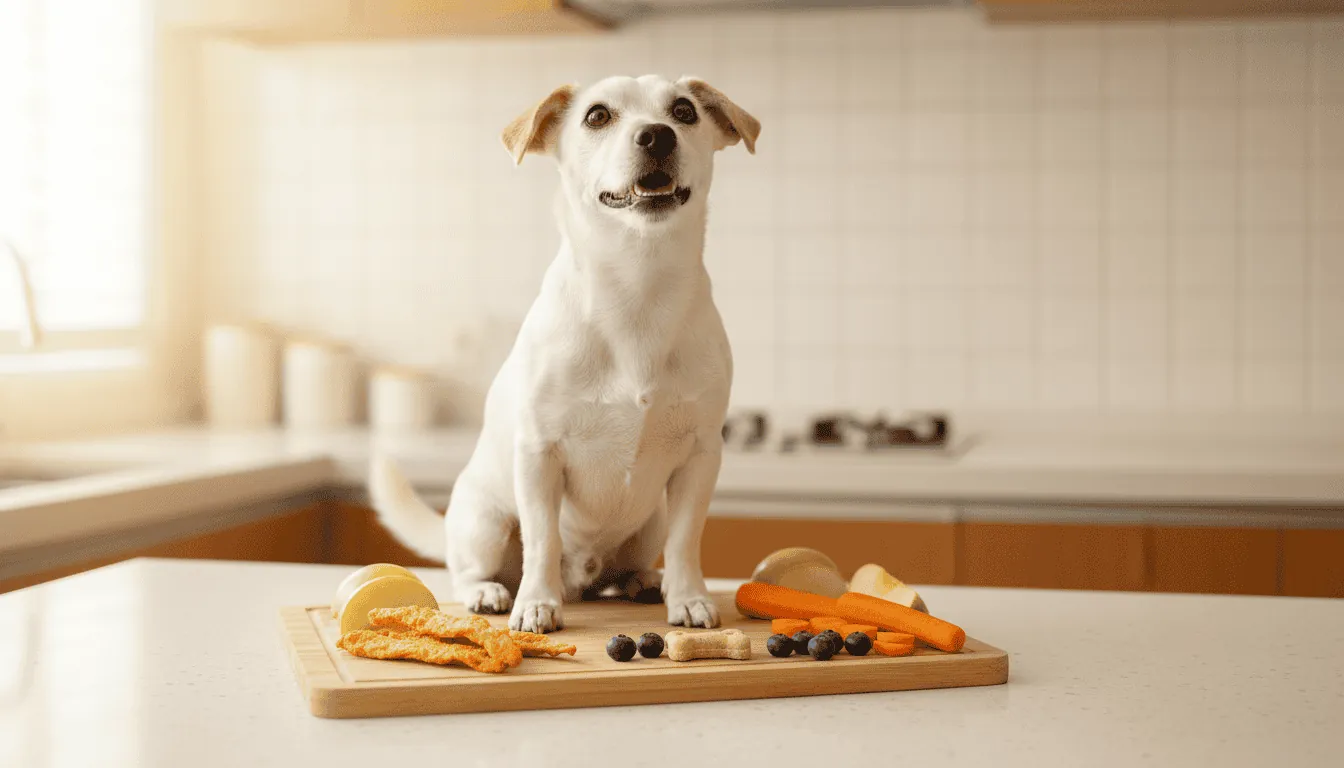
Plain cooked chicken breast, small pieces of carrot, cucumber, blueberries, plain pumpkin, or a slice of apple (no seeds, no core). These are naturally low-calorie and most dogs enjoy them. They are a useful way to keep treat calories low for dogs on a weight programme.
A short list of things that are generally fine for most healthy dogs in moderation: carrots, cucumber, apple (no seeds), blueberries, watermelon (no seeds), plain cooked pumpkin, plain cooked sweet potato, plain cooked chicken. A short list of everyday foods that are not: onions, garlic, grapes, raisins, chocolate, macadamia nuts, cooked bones, anything with xylitol.
Dental chews
Dental chews are a category where product quality really varies. Some are well-studied and do reduce plaque and tartar. Others are mostly marketing.
Look for the VOHC seal (Veterinary Oral Health Council) on the packaging if possible. Brands that carry it include Greenies Dental Treats, Virbac C.E.T. VeggieDent, and Whimzees. These are all available in Malaysia at most pet shops and vet clinics.
A caveat: dental chews are not a substitute for tooth brushing, and they are not covered by pet insurance. They also tend to be calorie-dense, so factor them into the 10% rule.
Low-calorie training treats
Tiny, soft, low-calorie treats are ideal if you are doing a lot of reward-based training. Brands available in Malaysia include Zuke's Mini Naturals, Pet Cubes, and several locally-made freeze-dried options sold on Shopee.
Treats keep dogs happy. Insurance keeps them protected.
No treat, however healthy, can prevent every problem. Pet insurance from Oyen covers up to 90% of eligible vet bills up to RM10,000 per year, at any licensed vet clinic in Malaysia.
Get a quick quoteWhat about homemade dog treats?
Homemade treats can be a lovely middle ground if you like cooking. They let you control ingredients, avoid preservatives, and use up leftover lean meat or vegetables. Plain dehydrated chicken or sweet potato slices made in an oven or dehydrator are simple, cheap, and genuinely healthy for most dogs.
A few things to watch:
Do not assume human-food recipes are safe just because a social media post says so. Double-check every ingredient against the toxic-food list above. Recipes containing raisins, chocolate, onions, or garlic have been posted as "dog treats" online despite being dangerous.
Homemade treats do not have to be nutritionally complete, because they should only ever be a small percentage of the diet. But they should not be the main food source.
Avoid cooked bones in homemade treats. They splinter.
Special situations: treats for dogs with health issues
Dogs recovering from pancreatitis or with chronic pancreatitis. Very low-fat treats only. Plain boiled chicken breast, small pieces of cooked sweet potato, or commercial low-fat therapeutic treats from brands like Hill's or Royal Canin. Always ask your vet first.
Overweight dogs. Lean protein, vegetables, and carefully portioned low-calorie treats. Reduce the main meal slightly to keep the daily calorie count honest.
Dogs with allergies. Single-ingredient, novel-protein treats (like duck, rabbit, or fish if your dog has not eaten them before) can help avoid flare-ups. Work with your vet if your dog has diagnosed food allergies.
Senior dogs. Softer treats are kinder on older teeth. Lower-calorie is usually better as activity levels drop. See our senior dog care guide for more on feeding older dogs.
Puppies. Small, soft, and not too rich. Puppy stomachs are sensitive and their teeth are still developing. Avoid hard chews until adult teeth are in.
Frequently asked questions
Are grain-free treats healthier?
Not automatically. Grain-free became popular a few years ago, but the science is mixed. Grains are not inherently unhealthy for most dogs, and some grain-free formulas have been linked to heart concerns in certain dogs (the FDA investigated this from 2018 to 2022). Unless your vet has specifically identified a grain allergy, grain-free is not required to be a healthy choice.
Is peanut butter safe as a treat?
Plain peanut butter without xylitol is generally fine in small amounts. Always read the label carefully. Xylitol is sometimes added to "sugar-free" or "natural" peanut butters and is deadly to dogs. When in doubt, buy a brand marketed for dogs.
Can I give my dog cheese as a treat?
Small amounts of plain cheese are fine for most dogs, but cheese is high in fat and salt. Avoid it for dogs with a history of pancreatitis, weight issues, or lactose intolerance.
Are rawhide chews safe?
Rawhide is controversial. Some dogs chew it safely for years; others choke or develop intestinal obstructions. Safer alternatives include bully sticks, yak milk chews, and dental chews with the VOHC seal. If you do give rawhide, supervise closely and remove small pieces before they are swallowed.
How many treats a day is too many?
The general rule is no more than about 10% of daily calories. For a small dog, that can be as little as 40 to 60 calories a day. For a large dog, it might be 150 to 200. Read the calorie count on the packaging and measure what you are actually giving.
Does Oyen pet insurance cover dog treats or special diets?
No. Dog treats, supplements, prescription therapeutic diets, and general food are not covered under Oyen's standard plans. Insurance is designed to cover medical treatment, not daily feeding. You can see our full list of exclusions here.
What if a treat causes my dog to get sick?
Contact your vet. Veterinary treatment for the resulting illness (like vomiting or gastroenteritis) is generally covered by pet insurance, subject to policy terms, waiting periods, and exclusions. But note that foreign object ingestion (for example, swallowing a piece of rawhide or cooked bone) is specifically excluded.
The bottom line
There is no single "healthiest" dog treat, because "healthy" depends on your dog's size, age, weight, health conditions, and how treats fit into the rest of their diet. For most healthy adult dogs, a mix of single-ingredient dehydrated meats, fresh whole foods like carrots and blueberries, and an occasional VOHC-approved dental chew is a reasonable, sensible combination.
The biggest wins come from simple habits: keep treats under 10% of daily calories, read labels, avoid the toxic ingredients list, and ask your vet if your dog has any specific health considerations.
Plan for the unexpected
Healthy habits and healthy treats go a long way. For everything else, Oyen pet insurance reimburses up to 90% of eligible vet bills, up to RM10,000 per year. Plans for dogs start from around RM30 per month.
See plans and pricingRelated reading
- Raw diet for dogs in Malaysia: an honest guide
- Pancreatitis in dogs: a Malaysian guide
- The real cost of owning a dog in Malaysia
- Senior dog care in Malaysia after age 7
Disclaimer: This article is for general information only and is not a substitute for veterinary advice. "Healthy" is not a single objective standard. What is appropriate for your dog depends on their age, weight, health conditions, and overall diet. Always consult a licensed veterinarian for guidance specific to your pet. Insurance coverage details are based on Oyen's current standard plans and subject to full policy terms, exclusions, waiting periods, and claims review. Brand mentions are for information only and are not endorsements or sponsored placements.
About the products listed here
We put this list together from public sources and our own research, and we update it when we can. Prices, availability, formulations and specifications change without notice, and we don't have direct access to each brand's internal information. Please check the current details with the seller or brand before you buy. If something here is out of date, or you represent a brand listed on this page and would like your details corrected, email us at hello@oyen.my and we'll update it.
Related guide: Top 8 Malaysian Freeze-dried Pet Treats