
Pet First Aid in Malaysia: 2026 Emergency Steps & Local Guidance
When your pet suddenly collapses, chokes, or starts bleeding, you cannot afford to panic. You need to act fast and make smart choices before you reach a clinic.
In Malaysia, traffic, distance, and clinic hours can delay care. Your response at home or on the road matters during these critical moments.
Pet first aid in Malaysia means you stay calm and protect your pet’s airway. These simple steps can reduce pain and lower the risk of serious harm while you travel to a veterinary clinic.
Key Takeaways
-
Act quickly to keep your pet breathing and control bleeding.
-
Spot warning signs early so you can respond before conditions worsen.
-
Keep a well-stocked kit and know how to use it during emergencies.
Why Immediate Pet First Aid Matters
In a pet emergency, your actions in the first few minutes can limit damage and protect your pet’s life. Quick, correct care keeps the situation stable until a veterinarian can take over.
|
Measurement |
Normal Dog Range |
Normal Cat Range |
|---|---|---|
|
Temperature |
38.3°C to 39.2°C |
38.1°C to 39.2°C |
|
Heart Rate |
70 to 160 BPM |
160 to 240 BPM |
|
Breathing |
10 to 30 breaths/min |
20 to 30 breaths/min |
The Crucial First Minutes
When your pet collapses, bleeds, or has a seizure, time matters. You cannot wait for traffic to clear or for the clinic to open.
Pet first aid focuses on stabilizing vital signs and preventing further harm. Knowing these baseline numbers helps you quickly spot danger.
In the first minutes, you should apply firm pressure to active bleeding. Clear the airway if your pet is choking and move them away from hazards like roads.
Reducing Risks and Preventing Complications
Pet emergencies often worsen when you delay care. Heavy bleeding can lead to shock, while heatstroke can damage organs within minutes.
You lower these risks when you act fast. Restrict movement to avoid worsening fractures and apply direct pressure for 5 to 7 minutes on wounds.
Always cool your pet gradually during heatstroke with tepid water. Proper care keeps the condition from becoming life-threatening before you reach a professional.
Malaysia’s Pet Emergency Realities
In Malaysia, you may face long drives or limited after-hours clinics. Not every area has a 24-hour veterinary hospital, making first aid skills essential.
Heat and humidity also increase risk. Outdoor pets may face snake bites, road accidents, or poisoning from household chemicals.
Prepare for these risks by keeping a carrier ready for transport. Always have contact numbers for the nearest 24-hour vet clinic saved in your phone.
Recognizing Common Pet Emergencies
You need to spot problems fast when your pet shows sudden changes. Clear signs and quick action can reduce harm before you reach a vet.
|
Symptom |
Potential Emergency |
|---|---|
|
Pale or blue gums |
Shock, choking, or anemia |
|
Repeated vomiting |
Poisoning or obstruction |
|
Sudden collapse |
Heatstroke or heart failure |
Visible Signs of Trouble
Watch for bleeding that does not stop after 5 minutes or deep cuts. Limping, dragging a leg, or refusing to stand may signal fractures.
Check the gums regularly. Healthy gums look pink and moist, while very red gums can point to heatstroke.
Other visible signs include a swollen abdomen or body tremors. These signs often appear in serious cases and need fast attention.
Key Symptoms Requiring Urgent Care
Trouble breathing is always urgent. Signs include open-mouth breathing in cats or the neck stretched forward to pull in air.
Repeated vomiting within a few hours can lead to rapid dehydration. This risk increases significantly in puppies and kittens.
Straining without passing urine, especially in male cats, is a true emergency. It can become fatal within hours if left untreated.
Essential First Actions in Any Pet Emergency
You need to think clearly and protect yourself. The first few minutes often decide how stable your pet will be during transport.
|
Action Item |
Safety Priority |
|---|---|
|
Check breathing |
High (Life-saving) |
|
Approach slowly |
High (Human safety) |
|
Call clinic |
High (Preparation) |
Staying Calm and Assessing the Scene
Start by slowing your breathing to avoid rushed mistakes. Look at your pet for movement and awareness before touching them.
Scan the area for hazards like broken glass or traffic. Remove or avoid these dangers first to ensure your own safety.
Focus on life-threatening problems first. Severe bleeding and breathing problems take priority over minor wounds or limping.
Prioritizing Pet and Human Safety
An injured pet may bite or scratch due to intense pain. Approach slowly and speak in a calm, low voice.
Use a towel or blanket over a small pet to gently control movement. For dogs, slip a leash over the head if it is safe to do so.
Do not muzzle a pet that is vomiting or struggling to breathe. Safe handling prevents more injury to both you and your pet.
How to Control Bleeding and Manage Wounds
You must act fast to control bleeding and reduce the risk of infection. Quick pressure and proper bandaging are the most important steps.
|
Wound Type |
First Aid Action |
|---|---|
|
Minor Cut |
Clean with saline and light wrap |
|
Active Bleeding |
Direct pressure with clean gauze |
|
Embedded Object |
Stabilize object; do not remove |
Steps to Stop Bleeding Fast
For external bleeding, press a clean cloth firmly over the wound. Hold steady pressure for several minutes without lifting the pad.
If blood soaks through, place another pad directly on top. Do not remove the first one, as this can restart the bleeding process.
Raising an injured leg slightly above heart level can help slow blood flow. Keep pressure on the wound while you do this during transport.
Bandaging and Aftercare
Clean minor wounds with clean water or saline to remove dirt. Avoid using home remedies or creams unless your vet advises it.
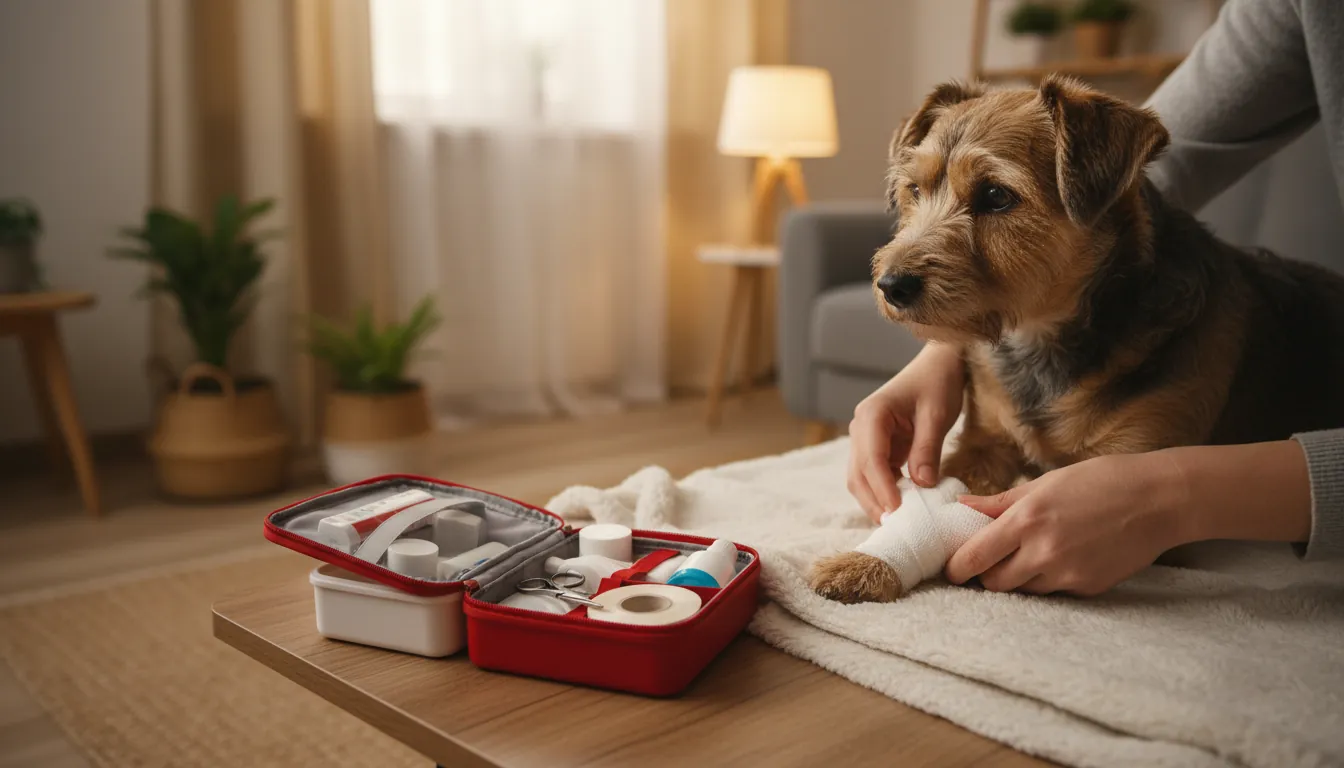
Place a sterile pad over the wound and secure it with a light elastic bandage. The wrap should be snug but never tight.
Check the bandage every few hours for swelling or bad smells. Even small wounds can worsen quickly in Malaysia’s humid climate.
Worried about unexpected vet bills? 🐾
With Oyen Pet Insurance, you can claim up to 90% of vet bills at any licensed clinic in Malaysia — from as low as RM30.60/month.
Policy terms and conditions apply.
First Aid for Choking, Breathing Difficulties, and CPR
Choking and breathing failure can turn critical within minutes. You must clear the airway if possible and start life-saving measures immediately.
|
CPR Step |
Action |
|---|---|
|
Compressions |
30 quick chest presses |
|
Rescue Breaths |
2 breaths into the nose |
|
Cycle |
Repeat 30:2 until vet help arrives |
Clearing Airway Blockages
Watch for pawing at the mouth or blue gums. Pull the tongue forward and look for a visible object to sweep out.
If the object does not come out, give five quick abdominal thrusts below the ribs. For large pets, stand behind them and pull inward.
Give five firm back blows between the shoulder blades if needed. Go to a clinic immediately, even if the object is cleared.
Administering Pet CPR
Start CPR if your pet is not breathing and you cannot feel a heartbeat. Place your pet on their side on a firm surface.
Give 30 chest compressions at a steady, fast pace. Compress the chest about one-third of its width, then allow a full recoil.
After compressions, give 2 rescue breaths into the nose. Continue this cycle while you travel to the nearest veterinary hospital.
Responding to Poisoning and Toxin Exposure
Poisoning is a highly urgent emergency that requires calm action. Identifying the toxin early can limit harm and improve recovery chances.
|
Toxin Group |
Common Examples |
|---|---|
|
Human Food |
Chocolate, onions, xylitol |
|
Medications |
Paracetamol, Ibuprofen |
|
Chemicals |
Bleach, pesticides, antifreeze |
Typical Malaysian Household Hazards
Many poison cases start inside the home with common foods. Chocolate, grapes, and onions can cause seizures or organ failure within hours.
Human medications like paracetamol are major dangers to pets. Even small doses may trigger a severe emergency requiring immediate care.
Licking household chemicals from floors or fur also poses a risk. Call your vet right away if you notice drooling or tremors.
When and How to Induce Vomiting
Do not induce vomiting unless a veterinarian specifically tells you to do so. In many cases, it can make the injury much worse.
Corrosive liquids like bleach can burn the throat again on the way up. Sharp objects may also cause internal damage if vomited.
When you call the vet, share exactly what was swallowed and how much. Follow their instructions carefully while heading to the clinic.
Dealing with Heatstroke and Temperature-Related Issues
Malaysia’s climate raises the risk of heatstroke, especially in cars or outdoor areas. You must start cooling your pet before reaching the clinic.
|
Cooling Step |
Method |
|---|---|
|
Environment |
Move to shade or air-con |
|
Hydration |
Offer small amounts of water |
|
Cooling |
Pour cool water over the body |
Recognizing Overheating in Malaysian Climate
High humidity limits your pet’s ability to cool down through panting. Heatstroke can occur quickly if they are left in poorly ventilated areas.
Watch for heavy panting, thick drooling, or bright red gums. A rectal temperature above 40°C signals a dangerous situation.
Flat-faced breeds face a much higher risk because they struggle to breathe hot air. This condition can lead to organ damage if you delay action.
Immediate Cooling Measures
Move your pet to an air-conditioned area immediately. Pour cool water over their body, focusing on the neck and belly.
Use a fan to increase airflow and speed up the cooling process. Never use ice water, as rapid cooling can cause shock.
Avoid covering your pet with wet towels for long periods because they trap heat. Head to the nearest clinic even if they seem better.
Building and Using a Pet First Aid Kit in Malaysia
You need a kit that fits local heat, rain, and travel patterns. Stock the right tools and know how to use them before an emergency happens.
|
Essential Item |
Emergency Use |
|---|---|
|
Digital Thermometer |
Check for fever or heatstroke |
|
Saline Solution |
Flush eyes or clean wounds |
|
Elastic Bandage |
Secure dressings on limbs |
Essential Supplies for Local Conditions
Malaysia’s climate increases the risk of skin infections and wound contamination. Your first aid kit should include antiseptic solution and sterile gauze.
Add tweezers for debris and a tick remover tool. Include a small bottle of clean water to flush dirt after floods.
Check expiry dates every six months to ensure items are safe to use. Replace any used or damaged items right away.
Creating a Portable Kit for Travel and Home
Prepare two kits if possible, keeping one for home and one for your car. Floods and road trips increase the chance of delayed vet access.
Use a waterproof, hard plastic container with a tight seal. Inside, keep a printed copy of your pet’s vaccination records.
Store your vet’s phone number and the nearest 24-hour clinic address in the kit. Keep it easy to reach within seconds during a crisis.
Frequently Asked Questions
What are the key steps to administering first aid in an emergency?
First, make sure the area is safe for you and your pet. Secure them with a leash or towel to prevent bites from pain.
Check their breathing and pulse. Look for heavy bleeding or signs of shock and call your vet right away.
How do I perform CPR on my pet?
Place your pet on their side and ensure the airway is clear. Breathe into the nose until the chest rises once every 5 seconds.
Give 30 chest compressions at a rate of 100 to 120 per minute. Alternate compressions and breaths until you reach a vet.
What should I do if my pet is bleeding heavily far from a clinic?
Apply firm, steady pressure with clean gauze. Do not lift the cloth to check the wound, as this disrupts clotting.
Raise the injured limb slightly if possible to reduce blood flow. Seek professional help immediately to manage potential internal bleeding.
Protecting Your Pet Starts Here
Pet emergencies can strike at any time, requiring both fast skills and immediate financial resources for care. Being prepared ensures your pet stays stable while you reach professional help.
Oyen offers comprehensive Pet Insurance plans to help cover high medical costs during critical situations. You can focus on your pet's recovery while we handle the eligible bills.
Check your pet's eligibility now - it takes less than 2 minutes.
Related guide: [Limited Time Promo] RM20 Voucher for Vaccinated Furkids