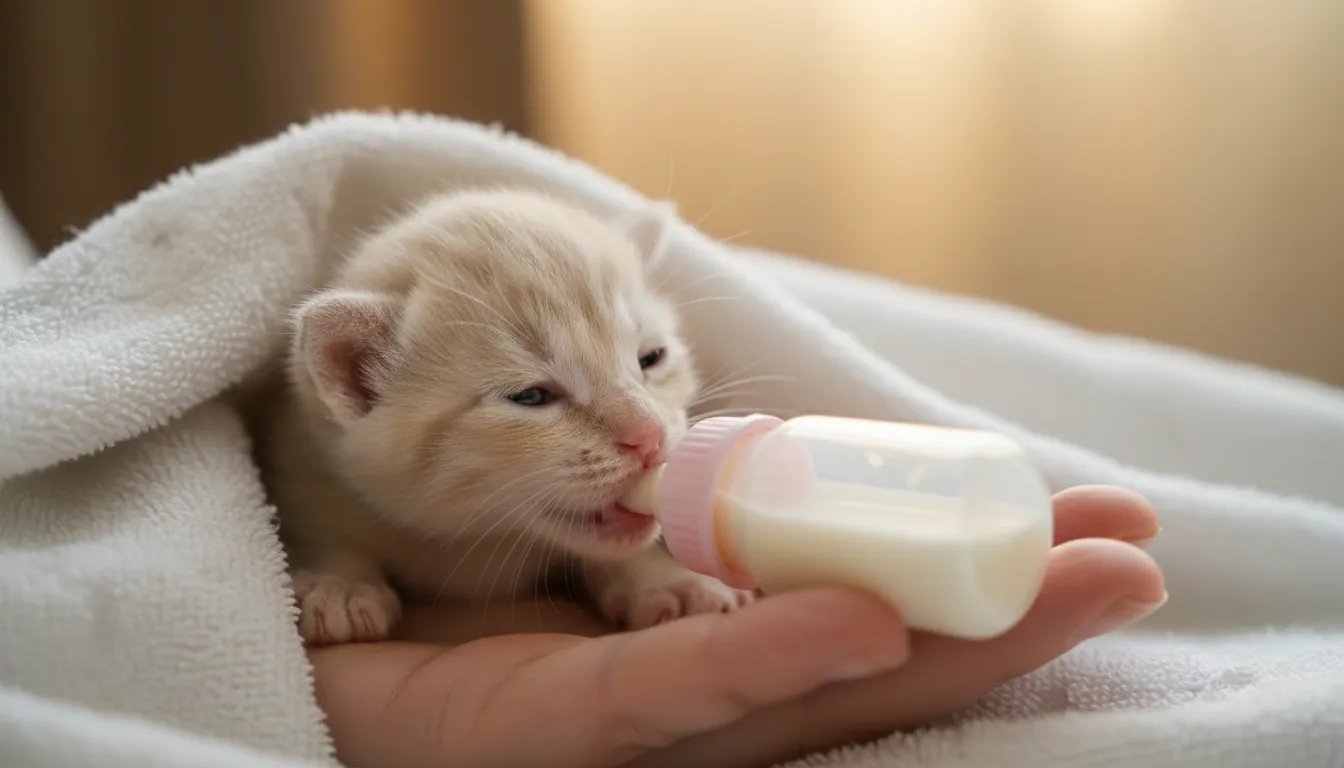

You found a tiny kitten on the street. No mother in sight. You bring it home and reach for the milk in your fridge. Stop. That cow's milk will likely give the kitten severe diarrhoea and could be fatal for a newborn.
This guide covers everything you need to know about kitten milk in Malaysia: which types are safe, the best brands available locally, a feeding schedule by age, and what to do if you can't find kitten formula right away.
Here's what we'll cover:
- Why kittens can't drink regular milk
- Best kitten milk brands in Malaysia (with prices)
- Feeding schedule by age
- How to bottle-feed a kitten
- When to transition to solid food
- Emergency homemade kitten formula
Disclaimer: This article provides general guidance on kitten feeding in Malaysia as of February 2026. Prices may vary by store. Always consult a veterinarian for specific dietary advice for your kitten.
Why Kittens Can't Drink Regular Milk
Most people assume kittens can drink cow's milk or goat's milk. They can't. Regular milk contains high levels of lactose that kittens cannot properly digest. Their digestive systems lack sufficient lactase enzymes to break it down.
Feeding a kitten regular milk causes diarrhoea, dehydration and malnutrition. In newborn kittens, dehydration from diarrhoea can be fatal within hours.
| Milk Type | Safe for Kittens? | Why |
|---|---|---|
| Mother cat's milk | Yes (best) | Perfect nutrition, antibodies, right lactose level |
| Kitten milk replacer (KMR) | Yes | Formulated to match mother's milk composition |
| Cow's milk | No | Too much lactose, wrong protein/fat ratio |
| Goat's milk | Emergency only | Lower lactose than cow's milk but still not ideal |
| Almond/soy/oat milk | No | Added sugars, lacks essential nutrients, causes malnutrition |
| Lactose-free pet milk (e.g., Zeal) | Supplement only | Good for older kittens and adults as a treat, not a sole food source |
Bottom line: If a kitten doesn't have its mother, use kitten milk replacer (KMR). Nothing else.
Best Kitten Milk Brands in Malaysia
These brands are widely available at pet stores and online in Malaysia. Prices are approximate and may vary.
| Brand | Type | Size | Price (est.) | Suitable Age |
|---|---|---|---|---|
| PetAg KMR | Ready-to-feed liquid | 325ml | ~RM32 | Newborn to 6 weeks |
| PetAg PetLac | Powder (mix with water) | 300g | ~RM69 | Newborn to weaning |
| Neu Zea Milk Replacer | Powder (mix with water) | 250g | ~RM23 | Newborn to weaning |
| Zeal Lactose-Free Pet Milk | Ready-to-feed liquid | 1 litre | ~RM21 | Older kittens and adults (supplement only) |
| Royal Canin Babycat Milk | Powder (mix with water) | 300g | ~RM80 | Newborn to 2 months |
Our recommendation: For newborn kittens (0-6 weeks), PetAg KMR is the gold standard. It's ready-to-feed, easy to digest and widely available on Shopee and at most pet stores. If budget is tight, Neu Zea is a solid affordable option at about RM23.
Zeal Lactose-Free Milk is not a complete kitten formula. It works as a supplement or treat for older kittens and adult cats, but should not be the sole food source for newborns.
Where to Buy in Malaysia
| Where | Brands Available | Notes |
|---|---|---|
| Shopee / Lazada | All major brands | Cheapest option, but 1-3 day delivery. Not suitable for emergencies. |
| Pet Lovers Centre | KMR, Zeal, Royal Canin | Walk-in, available in most malls |
| Petsmore | Zeal, Neu Zea, KMR | Walk-in, many locations across Malaysia |
| Your vet clinic | Varies | Best for emergencies; vet can recommend the right product |
Kitten Feeding Schedule by Age
How much and how often you feed a kitten depends on its age. Newborns need feeding every 2-3 hours around the clock, including at night. As the kitten grows, feeding frequency decreases.
| Age | Weight | Feed Amount (per feeding) | Frequency | Food Type |
|---|---|---|---|---|
| 0-1 week | 50-150g | 2-6ml | Every 2-3 hours (including night) | KMR only |
| 1-2 weeks | 150-250g | 6-10ml | Every 3-4 hours | KMR only |
| 2-3 weeks | 250-350g | 10-14ml | Every 4-5 hours | KMR only |
| 3-4 weeks | 350-450g | 14-18ml | Every 5-6 hours | KMR + introduce wet food |
| 4-5 weeks | 450-550g | 18-22ml (reducing) | Every 6-8 hours | Wet food (main) + KMR (reducing) |
| 5-6 weeks | 550-700g | Phasing out formula | 3-4 times daily | Wet food + water |
| 6+ weeks | 700g+ | No formula needed | 3-4 times daily | Kitten wet/dry food + fresh water |
Important: Always weigh the kitten daily. A healthy kitten should gain approximately 10-15g per day. If the kitten isn't gaining weight, consult a vet immediately.
Worried about unexpected vet bills? 🐾
With Oyen Pet Insurance, you can claim up to 90% of vet bills at any licensed clinic in Malaysia — from as low as RM30.60/month.
Policy terms and conditions apply.
How to Bottle-Feed a Kitten
Bottle-feeding a kitten requires proper technique. Doing it wrong can cause aspiration pneumonia, which is when milk enters the lungs. This can be fatal.
| Step | What to Do | Why It Matters |
|---|---|---|
| 1 | Warm formula to body temperature (about 35-38°C). Test on your wrist. | Cold milk causes stomach upset. Hot milk burns the mouth. |
| 2 | Place kitten on its stomach (belly down), never on its back. | Feeding a kitten on its back causes milk to enter lungs (aspiration). |
| 3 | Tilt bottle at 45 degrees. Let kitten suckle at its own pace. | Don't squeeze milk in. Let the kitten control the flow. |
| 4 | After feeding, gently pat the kitten's back to help it burp. | Releases trapped air, prevents bloating. |
| 5 | Stimulate urination/defecation by rubbing the genital area with a warm damp cloth. | Newborn kittens can't eliminate on their own. Mother cat normally does this by licking. |
Never use a microwave to warm formula. It creates hot spots that can burn the kitten's mouth. Warm the bottle in a bowl of hot water instead.
Transitioning to Solid Food
At around 3-4 weeks old, kittens start developing teeth. This is when you can begin introducing wet food alongside formula.
| Week | What to Do | Food Mix |
|---|---|---|
| Week 3-4 | Mix a small amount of wet food into formula to create a thin gruel | 75% formula / 25% wet food |
| Week 4-5 | Thicken the gruel gradually, offer from a shallow plate | 50% formula / 50% wet food |
| Week 5-6 | Mostly wet food with small amount of formula mixed in | 25% formula / 75% wet food |
| Week 6+ | Full wet food, start introducing kitten dry food if desired | 100% kitten food + fresh water |
Always provide fresh water once the kitten starts eating solid food. Once fully weaned, adult cats do not need milk. Water is sufficient.
For more on caring for young kittens, read our kitten care guide. If you're a first-time cat owner, our first-time cat owner guide covers everything from setup to feeding.
Emergency Homemade Kitten Formula
If you find a kitten late at night and cannot buy KMR immediately, you can make a temporary formula. This is a short-term emergency solution only. Switch to proper kitten milk replacer as soon as possible.
| Ingredient | Amount |
|---|---|
| Whole goat's milk | 4 cups |
| Corn syrup | 1 teaspoon |
| Plain yoghurt (goat's milk preferred, no flavouring) | 1 tablespoon |
| Egg yolk (no white) | 1 |
| Unflavoured gelatin | 1 sachet (newborn), increase to 4 sachets by week 4 |
Heat the goat's milk and gelatin in a saucepan until the gelatin dissolves. Turn off the heat, then mix in the remaining ingredients. Refrigerate and use within one week. Warm to body temperature before feeding.
Do not use this formula for more than 48 hours. Get proper kitten milk replacer from a pet store or your vet as soon as you can.
Common Mistakes to Avoid
| Mistake | What Happens | What to Do Instead |
|---|---|---|
| Feeding cow's milk | Diarrhoea, dehydration, can be fatal in newborns | Use kitten milk replacer (KMR) |
| Feeding kitten on its back | Milk enters lungs, causes aspiration pneumonia | Always feed belly-down |
| Overfeeding | Bloating, regurgitation, diarrhoea | Follow the schedule above, let kitten stop when full |
| Not stimulating elimination | Constipation, bloating, can be dangerous | Rub genital area with warm damp cloth after each feeding |
| Skipping night feeds for newborns | Hypoglycaemia, weakness, potentially fatal | Feed every 2-3 hours around the clock for the first week |
When to See a Vet
Hand-rearing a kitten is rewarding but risky. Take the kitten to a vet if you see any of these signs.
| Warning Sign | What It Could Mean | Urgency |
|---|---|---|
| Not gaining weight for 2+ days | Inadequate feeding, illness, infection | See vet within 24 hours |
| Persistent diarrhoea | Infection, wrong formula, overfeeding | See vet same day |
| Refusing to eat | Illness, pain, aspiration | See vet urgently |
| Difficulty breathing, wheezing | Aspiration pneumonia, upper respiratory infection | Emergency |
| Cold to the touch, limp | Hypothermia, severe dehydration | Emergency |
Vet visits for kittens can cost RM50-RM300 depending on the treatment needed. Pet insurance from Oyen covers illness and treatment costs at any registered vet clinic in Malaysia. It's worth considering if you're raising a kitten, especially one you've rescued. Learn more about coverage in our pet insurance guide.
FAQ
Can kittens drink cow's milk?
No. Cow's milk contains too much lactose for kittens to digest. It causes diarrhoea and dehydration, which can be fatal in newborn kittens. Use kitten milk replacer (KMR) instead.
Where can I buy kitten milk in Malaysia?
Pet Lovers Centre, Petsmore and most local pet shops carry kitten milk formula. You can also buy online from Shopee or Lazada. For emergencies, your vet clinic may have formula in stock. Brands like PetAg KMR (~RM32) and Neu Zea (~RM23) are widely available.
How often do I need to feed a newborn kitten?
Every 2-3 hours around the clock, including at night. This is for the first week of life. By week 2-3, you can extend to every 3-4 hours. By week 4, every 5-6 hours. It's a demanding schedule but essential for survival.
When can kittens start eating solid food?
At around 3-4 weeks old, when their teeth start coming in. Begin by mixing wet food into the formula to create a thin gruel. Gradually increase the ratio of wet food to formula over 2-3 weeks. Most kittens are fully weaned by 6-8 weeks.
Conclusion
Hand-rearing a kitten is a big commitment, especially in the first few weeks. The right formula, proper feeding technique and a consistent schedule give the kitten the best chance. Use kitten milk replacer, never cow's milk, and see a vet if the kitten isn't gaining weight or shows signs of illness.
Rescued kittens are vulnerable to infections and health issues. Pet insurance helps cover vet costs so you can give your kitten the care it needs without worrying about the bill.
Get cat insurance for your kitten - from RM30.60/month
About the products listed here
We put this list together from public sources and our own research, and we update it when we can. Prices, availability, formulations and specifications change without notice, and we don't have direct access to each brand's internal information. Please check the current details with the seller or brand before you buy. If something here is out of date, or you represent a brand listed on this page and would like your details corrected, email us at hello@oyen.my and we'll update it.